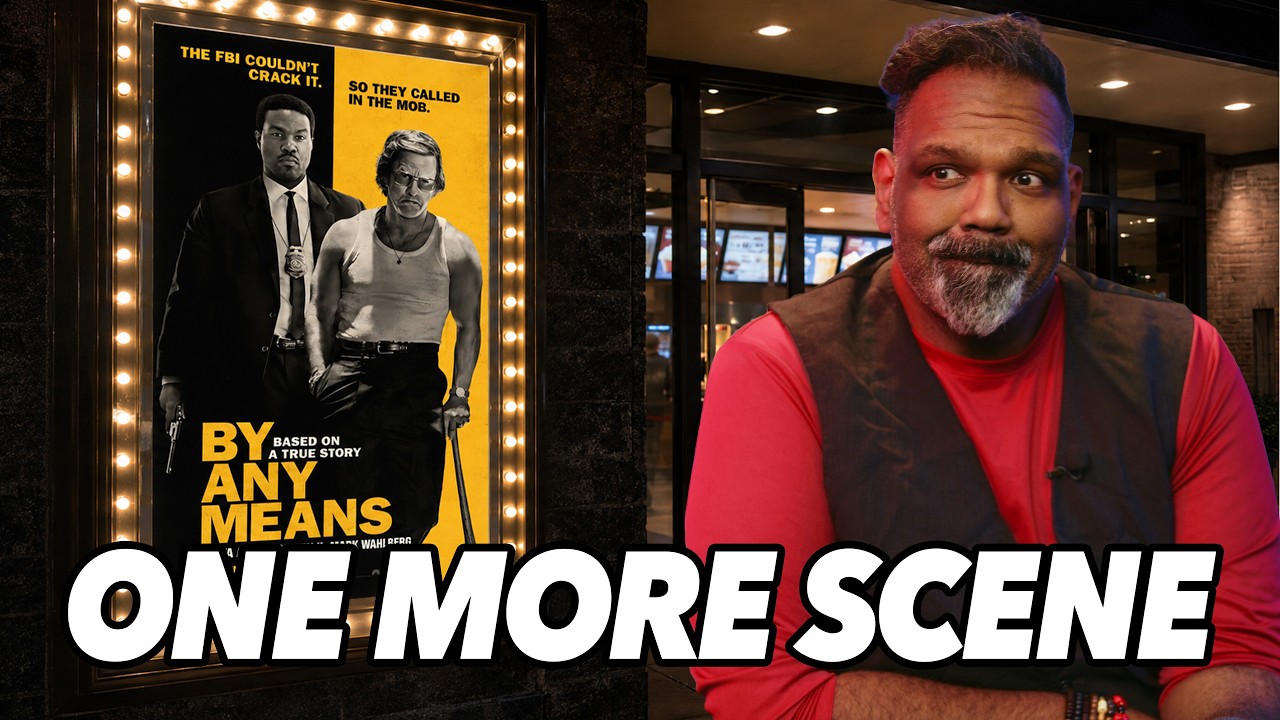
January 1966, Laurel, Mississippi. Two men walk into a TV repair shop. One of them is an FBI agent. The other is a Colombo family hitman named Gregory Scarpa, and they are there to buy a television.
The guy behind the counter is a Klansman named Lawrence Byrd, and he is a suspect in the firebombing that killed Vernon Dahmer, and he has no idea who these two are or what they are about. So they buy the set, and they ask him, real polite, would you mind helping us carry this out to the car?
And Byrd, being a helpful small business owner, carries his own kidnapping out to the trunk.
They put him in the car. They drive him somewhere quiet. Scarpa beats him until he talks, and Byrd gives up a twenty-two page confession that names the Exalted Cyclops of the White Knights, and that piece of paper is how the State of Mississippi ends up with a case.
That is in the FBI files. A television set.
You know what is in the movie? A baseball bat.
Hold onto that, because the same thing happens at the end of this movie, and the ending, they did not even shoot it. They typed it.
This is the spoiler half. Thursday’s video was the non-spoiler press-screening read, and this one is about the last ten minutes and what I would have shot instead. If you have not seen By Any Means yet, this is your exit.
The Movie Hands You a Bibliography
You saw it. You know the exact moment I mean.
David Strathairn walks up to the podium, tells the press the Bureau has its confessions, and the screen goes black. And you sit there and you wait for the last beat, because there is always a last beat.
Instead, the text starts. White type on black. Gregory Scarpa went on to. Lindley DeVecchio was later. The unnamed Black agents who. Card after card after card, with photographs of the real people.
And I am sitting in the dark reading a movie I just watched.
I wanted one more scene. The movie handed me a bibliography.
I get it. True story movies end on cards. That is the genre, and that is fine. What is not fine is what these cards are being asked to carry, because everything that makes this a true story, the stuff on the posters, lives on those cards and almost nowhere else.
The biggest card in the pile is about DeVecchio, Scarpa’s FBI handler, and that card is describing things that happened thirty years after the last frame you watched. The movie reached three decades past its own ending to make a point its last act did not make.
(I go a good bit deeper on the DeVecchio card and the part of this story the court spent two years on in this week’s sidebar for members, where I am combining the non-spoiler and spoiler sidebars into one. If that is your thing, I hope you can join me over there.)
The Truth Had a Television Set in It
Now back to that TV, because this is the part that made me go home and read for three hours instead of going to bed.
The movie opens in 1964. Scarpa, a baseball bat, and Edgar Ray Killen, the Klan preacher, and it is staged as the reason the FBI found the three civil rights workers buried in that dam. I am watching it thinking, okay, that is a hell of a way to open a movie.
Then I went and looked, because whether that scene happened is the single most fought-over thing in this entire story.
Jerry Mitchell is the name you need here. Clarion-Ledger for decades, Mississippi Today now, MacArthur genius grant, and the reason Sam Bowers, the Imperial Wizard who ordered the hit on Vernon Dahmer, finally went to prison in 1998 is that this man would not let the case die.
Mitchell wrote about this movie in December, and what he reported is that the former FBI agents who were actually in that field office say the bat scene did not happen. The location of the bodies came from a highway patrolman who knew the Klansmen and told the FBI inspector where to dig. Four days later, they dug.
The bat comes from a book, Peter Lance’s Deal with the Devil, and Lance is a five-time Emmy winner. I am not waving him off. But the Bureau has never once in sixty years confirmed Scarpa was in Mississippi at all.
And meanwhile, the television set, the thing I opened this with, that is in the files. Two men, a TV, a Klansman loading it into his own trunk, a twenty-two page confession. Strange, specific, true, and honestly kind of funny in the way real things are funny.
So the movie had that available, and it opened on a bat.
That is the whole film in one decision for me. The truth had a television set in it, and they chose the bat.
What It Gets Right, and I Am Not Burying It
Let me tell you what this movie gets right, because it gets the most important things right, and I am not going to let the rest of this bury it.
January 9th, 1966. Vernon Dahmer goes on the radio and says he will collect poll taxes for his neighbors and pay them out of his own pocket for anybody who cannot pay. The next night the White Knights firebomb his house and his store, and the movie stages it the way it happened. He is in the doorway. He is returning fire so his wife and his kids can get out the back, and he dies of it. Burns, the lungs, the smoke he swallowed standing in that door so his family could live.
Giancarlo Esposito plays him with a stillness I did not see coming from an actor whose whole career lately is menace. It is the best scene in the film and it is not close.
His family does not agree about this movie, and both of the people I am about to quote were in that house.
Dennis Dahmer, his son, is petitioning Paramount. His words: “It’s fiction. They’re creating a Black FBI agent that didn’t exist, and his legacy deserves to be told truthfully about who he was and not intermeshed with fictional characters and vigilante justice storylines that did not happen.”
His sister Betty, who was ten years old that night and was burned, told Jerry Mitchell: “The way the movie is portrayed, it’s not about Vernon Dahmer. It’s about Gregory Scarpa. I have no problem with it.”
Their mother, Ellie, is 101 and alive.
I hear both of them, and I am not going to stand here and tell that family who is right. Dennis is right that Wayne Strider never existed. Betty is right that it is Scarpa’s movie. What I saw is a film that got the night of January 10th exactly right and built a fiction on either side of it, and you can hold both of those at the same time. I do.
The One Line the Movie Wrote and Then Forgot
You remember the fight, middle of the street. Knock-down, drag-out, Wahlberg, because Scarpa keeps pushing and pushing and Strider finally swings. And the line Strider says is, “I gotta live here.”
I sat up, because that is a whole character in four words.
The producers have said flat out that Strider is a composite who grew up in Mississippi and moved to Chicago. He is from here. He left. The Bureau sent him back with a killer in the passenger seat. And after the confessions, after the podium, after he gets fired and goes back to that motel, the movie has exactly one question left to answer.
Does he stay? Does the man who said “I gotta live here” actually live here?
And the movie cuts to black and types at you. About the bad guys. Again.
The Easy Look, and What Twenty-Five Days Buys
Thursday was about the budget. This is about the choice.
Elegance Bratton said this week that he shot the Klan violence on purpose in a way that would, his words, “deny you that satisfaction.” He did not want the burning cross to be a spectacle, and I respect that. I really do.
But what it produced on screen is a Klan that is all pseudo-religious mumbo jumbo, guys spewing scripture while they pour gasoline on a cross, and nothing under it. No hierarchy under it. Nothing that tells you the White Knights were an organization with a chain of command and a man at the top who would or could order a firebombing over the phone.
It is the easy look again, and an important story told with the easy look starts to feel like a reenactment on the History Channel. It starts to feel like something the production was obligated to make instead of something somebody was dying to make. Stack the famous names, hit the marks, cut to the cards, go home.
I want to be careful here, because I am describing what the screen feels like and not what anybody meant. Bratton’s own life is the argument against phoning this in. But he is also the one who said they shot it in twenty-five days, and paint-by-numbers is what twenty-five days buys you on a story that needed, I do not know, forty.
Which is where I have been trying to correct something I said at the top on Thursday. It did not feel like they ran out of story.
It felt like they ran out of days.
The Ending I Would Have Shot
I have been shooting this ending in my head for a week. I walked Mrs. Know-It-All through it and she said I needed to tell you guys. There is the cheap version and there is the one I actually want, and I will give you the cheap one first, because it costs a graphics artist and a week.
You keep the cards, but every card gets a picture. Slow motion, black and white, a newspaper front page with an animated image, and the headlines tell the story. Yes, it is gimmicky, but it gives you something to hold onto instead of white type. And on the last one you cross-fade from Mark Wahlberg to the actual Gregory Scarpa and dissolve to black. Done. That alone is better than what is there.
Now the one I want.
You keep Strathairn at the podium. You keep the cut to black. A single beat.
Then you hard cut to a country road, the one that runs through the town, the one this movie has already shown you about a dozen times. Tight close-up at road level, and Strider’s shoes walk into frame, and we track with them. His hand comes down into the shot and he picks up a handful of dirt off that road, which is a very common thing for a man to do in the South. If you are from there, like my father is, you know exactly what he is doing without me explaining it.
Cut to the wide, the first shot of the road, and he stands up into frame. He dusts his hands off. He looks past the camera toward whatever comes next. Then he turns, and he looks back down the road the other way, toward the direction we know his home is.
And the music starts. Diane Warren wrote a title song for this movie, by the way, so there is a song sitting right there with nowhere to live.
The credits roll. He looks past camera one more time, and he takes his first steps away from us, and he heads presumably home. We do not move. He walks further and further until he is a shape, until he is nothing, and we fade to black on the final title card.
That is it. One location the production already paid for. One actor. No dialogue. Maybe an hour of a twenty-five day schedule.
And it answers the only question the movie left open, which is whether “I gotta live here” was a threat or a promise. It pays off the composite. It gives the song a home. And it lets the cards be what cards are supposed to be, which is the footnotes instead of the ending.
The Verdict
By Any Means gets the night of January 10th, 1966 exactly right, and Giancarlo Esposito’s Vernon Dahmer is the best thing in it by a distance. Everything on either side of that doorway is a fiction that a twenty-five day schedule could not afford to finish, and the last ten minutes prove it, because the film outsources its own conclusion to white type on black.
I can see the movie they wanted to make very clearly. I can see it in that doorway, and I can see it on that road.
That is just not what we got, and that is the most unfortunate thing about it. They had the road, and they used the font.
Your turn: what is the last shot you would have put on that road? The conversation lives in the comments on the video above, and he says he is reading every one of them.