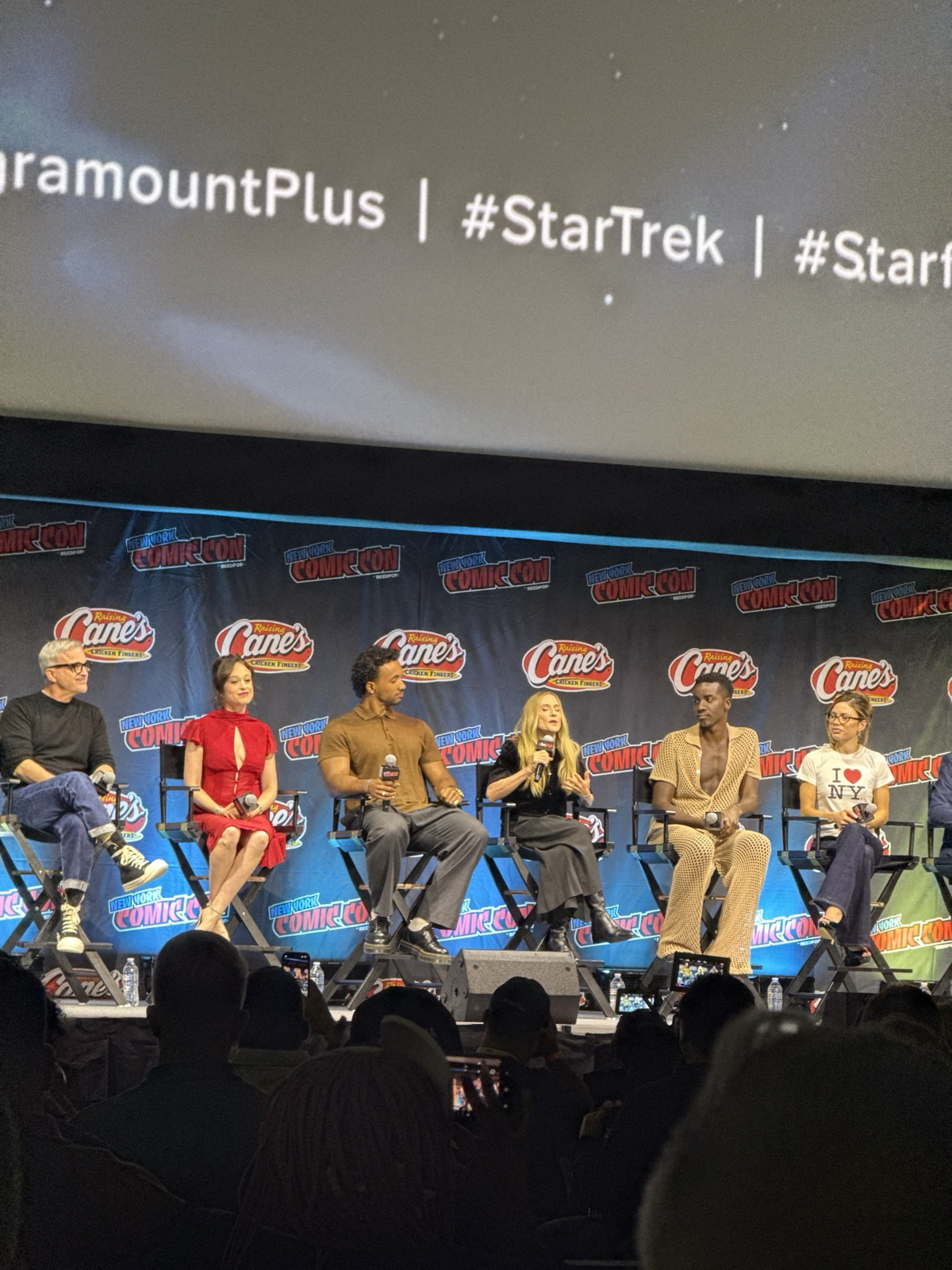
I keep coming back to the same thought with Starfleet Academy: this season was closer than it looked.
Not because it secretly worked. Not because it was misunderstood. And most definitely not because one tiny adjustment would have turned it into a masterpiece. But I think the better version was already in there. The pieces were there often enough. They were just in the wrong places. And once I started moving one major piece around in my head, the whole season started changing shape. Not in a fan fiction way. In a structural way.
Episode 9 should have been episode 3.
Not literally, scene for scene. I mean the break. The rupture. The moment where the season stops hovering around possibility and actually becomes the show. That should have happened in episode 3. Because once it does, five other things start working almost automatically.
Now, this is not another season autopsy. We already did that video, and I already know what I think about the version we got. Trust me. What interests me here is the version hiding inside it. The one that actually has an engine. Because I don’t think Starfleet Academy was empty. I think it was disorganized. And that’s a much more interesting problem. If a season is empty, there is nothing to uncover. If it is disorganized, the better shape might already be sitting there, waiting for someone to put pressure on the right parts. And with this show, I really think that’s what happened.
Move the rupture earlier and the academy stops being decorative. Once that happens, the Athena starts mattering. Once the Athena matters, the barrier can start generating episodes instead of just trapping people. Once the middle of the season is doing real setup, the finale stops borrowing weight it never earned. And once the emotional storylines start colliding with actual tactical pressure, the characters stop floating beside the plot and start changing it.
That’s the version I want to show you.
Break the Season Open in Episode 3
So here’s the move. Keep most of episode 1, for sure. I think you keep most of episode 2 as well. Then you use episode 3 to break the season open.
Yes, there is absolutely a cost. You lose some of the luxury of just hanging around the school longer. But I would make that trade every time. Because in the aired version, the academy often feels like a premise waiting to become a show. In the better version, the academy becomes the thing under pressure. The second that happens, the premise starts producing story.
If episode 3 becomes the rupture, the Miyazaki exercise becomes the trap door. That is how you get a real spread of people outside: cadets, faculty, military college personnel, a meaningful chunk of the institution. Not just the standard main cast cluster. Meanwhile, the military chancellor stays back at the school, which preserves that institutional life on both sides of the split.
Then the omega lockdown hits, and that changes the premise immediately. The academy is no longer the place where the plot occasionally visits students. It becomes the thing that got hit. That changes the watching experience. Now the school is not passive background. Now every scene inside that premise carries pressure. Teachers are functioning differently. Students are functioning differently. The institution is being forced into use before it’s ready.
That is the first real upgrade.
Live on the Athena
Then the Athena stops being just another ship and becomes the place the season actually lives. And that matters, because television needs containers. It needs repeated, inhabited space. It needs a place where labor, tension, correction, hierarchy, and exhaustion can build over time. That’s what the Athena gives you.
Now Reno is not just a familiar face, she’s engineering in an emergency. Now the Doctor is not just legacy texture, he’s medicine, morale, and experience. Now command decisions land somewhere. Now security has daily function. Now the students are learning jobs under pressure instead of talking about maybe doing them someday.
Once the season keeps returning to that ship, the audience starts understanding its grammar. People launch from there. They come back hurt there. They bring bad news back there. They miss windows from there. They regroup there. That’s why the Athena is such a strong fix. It doesn’t just make the lore cleaner, it gives the season somewhere to accumulate force. And trust me, that’s going to matter later, because you can’t ask the audience to feel sacrifice for a ship they never really inhabited.
Let the Barrier Generate Episodes
The barrier needs to do more than just sit there. Give it weak points. Not holes. Not easy exits. Weak points. Places where ships can’t pass and weapons can’t pass through, but communication can squeeze through. Maybe a signal. Maybe a holo message. Maybe only at a few unstable coordinates.
Now the barrier starts creating episode shape. Because “we’re trapped” is a condition. “We’re trapped, but there are narrow points where action is possible” is a season. Now you have repeatable scene logic: missing a window, missing a contact point, getting partial information through, sending the wrong team because they’re all you have, making it back too late. That’s where the show starts feeling like television instead of concept art. And it improves the academy premise at the same time, because these students are no longer learning abstractly. They’re learning because reality is already demanding labor from them.
Layer the Outside World Before the Finale Needs It
This is where moving the Dereth and Jaden material earlier pays off. Not because those plots become masterpieces on their own, because trust me, they’re not. But because the end of the season needs them.
If Dereth’s whole world, his obligation and his political value, are going to matter later, that material has to start living in the middle of the season. So moving the wedding material earlier works because it lets the crisis widen. Now outside worlds are part of the problem before the finale needs them to be part of the solution. Same thing with Jaden and the Klingon material. That thread needs runway. If the Klingons are going to matter at the end, the season has to spend time with them before the climax asks the audience to care.
And that changes the feel of the finale, the whole thing. It no longer looks like the show grabbing important-looking pieces at the last minute. It feels prepared.
Force the Emotional Lines to Collide with Consequence
The character material improves for really the same reason. The Doctor and Sam work better once that relationship is under pressure instead of just adjacent to it. He is stronger when he is not vaguely brusque. Reluctance is the right choice, trust me. He keeps distance because attachment has a cost. That gives later scenes somewhere to land.
So when Sam starts destabilizing under the strain, sending the Doctor and Ake to her creators, her people, is no longer just a character errand. It forces his emotional logic into the open. And once the hologram mechanics get tied to lived identity instead of just tech procedure, the whole thing gets way more Trek. You can’t just upload experience, you can’t just inject maturity, and you definitely cannot shortcut personhood and still expect it to mean anything.
Same with Caleb’s mother. She works better as pressure before she works as presence. Then, when they finally track her down, that mission does two jobs at once. First, it gives Caleb emotional collision. Second, it exposes the Athena tactically. That’s the kind of story pressure the season needed more of.
By that token, the trial also improves once it comes after the labor. I think that is definitely the key. By then, we have already watched Ake improvise command. We’ve watched her hold together a broken situation. We’ve watched her function as Starfleet before the institution was ready to admit that’s what was happening. So when the institution turns around and judges her, the audience is already positioned. We know what work was done. And that changes the feeling of the trial completely. Now it’s not abstract institutional drama. Now it feels like the system misreading labor we already watched happen. That’s why the guilty verdict works better late. It gives the finale a real target instead of just more noise.
A Finale the Season Actually Earned
And this is why the finale works better in the reconstructed version. Not because the events are automatically bigger, trust me. But because the season underneath them has really earned them. It lived on the Athena. It used the barrier as a mission machine. It layered outside alliances before asking them to matter. It turned emotional lines into tactical pressure.
So by the time Braka corners them, by the time Starfleet is trapped on the far side unable to help, by the time the Athena is at risk, by the time the Doctor’s sacrifice and restoration logic comes into play, by the time the allies arrive and the corridor opens, the season is no longer imitating culmination. It has actually built toward it.
Even the Doctor payoff lands better under that logic. After the holo-emitter gets restored, he reverts through that emitter logic, and Sam ultimately has to face a version of him that’s not the person she knows. The scene’s not just trading on nostalgia. The season has already taught us how to think about hologram continuity, memory, and lived identity. So the moment works as character science fiction and payoff at the same time. And when the allies arrive, because they’re going to have to arrive, the Klingons and Dereth’s people coming to the rescue, that ending is no longer louder than the season. It finally belongs to the season. It’s heroic because it builds.
One Move, Five Systems
This is really the hierarchy of the whole thing. The biggest move is the rupture in episode 3. That forces the academy to become dramatic instead of decorative. Once that happens, the Athena becomes the season’s lived-in container. Once that happens, the barrier’s weak points create recurring mission logic. Once that happens, the middle of the season can prepare the finale instead of postponing it. And once all of that is in place, the emotional stories stop floating at the edges and start affecting the strategic shape of the season.
That is the engine. Everything else supports it.
No, I do not think Starfleet Academy needed a total reinvention. I think it needed one major move that improved five other systems. Break the season earlier. Live on the Athena. Let the barrier generate episodes. Layer the outside world material before the ending needs it. Force the emotional lines to collide with consequence. Then let the institution judge people only after we’ve seen what it demanded from them.
That’s the version of the season that comes alive. And that’s why this is not really a teardown. It’s a demonstration. A demonstration that the workable version was already in there. They didn’t need a new show. They needed the show they had to reveal its engine sooner.
And that may be the clearest difference between the version we got and the version I’m describing. In the aired version, the show still has to stop and tell you these people are connected. It still has to hand you the feeling. It still has to stage the bond as a moment. In this version, it doesn’t. Because by the time you get to the end, you already feel it. You’ve lived with them on the Athena. You’ve watched them work together. You’ve watched them fail, adjust, protect each other, and carry this thing together. So when they stand together at the end, that lands. Not because the show announces it, but because the season earned it.
Or am I wrong? Does the academy premise only really work once the school is forced to become Starfleet in practice? And if you buy that, what’s the one move you think this season needed most? Make the case in the comments on the video. I’d love to have that conversation.
Everyone loves a know-it-all. Join the discussion in the comments on the video.