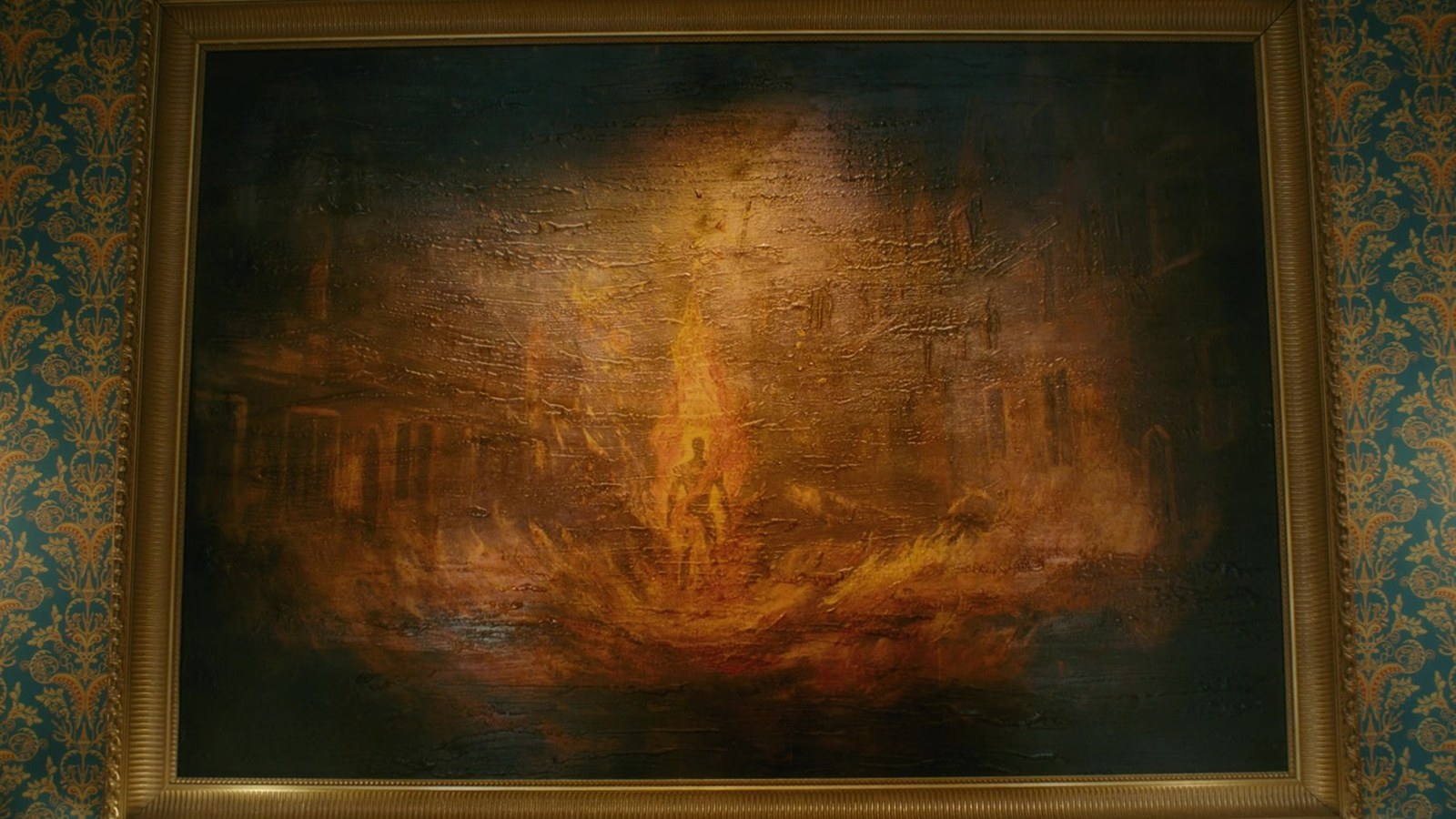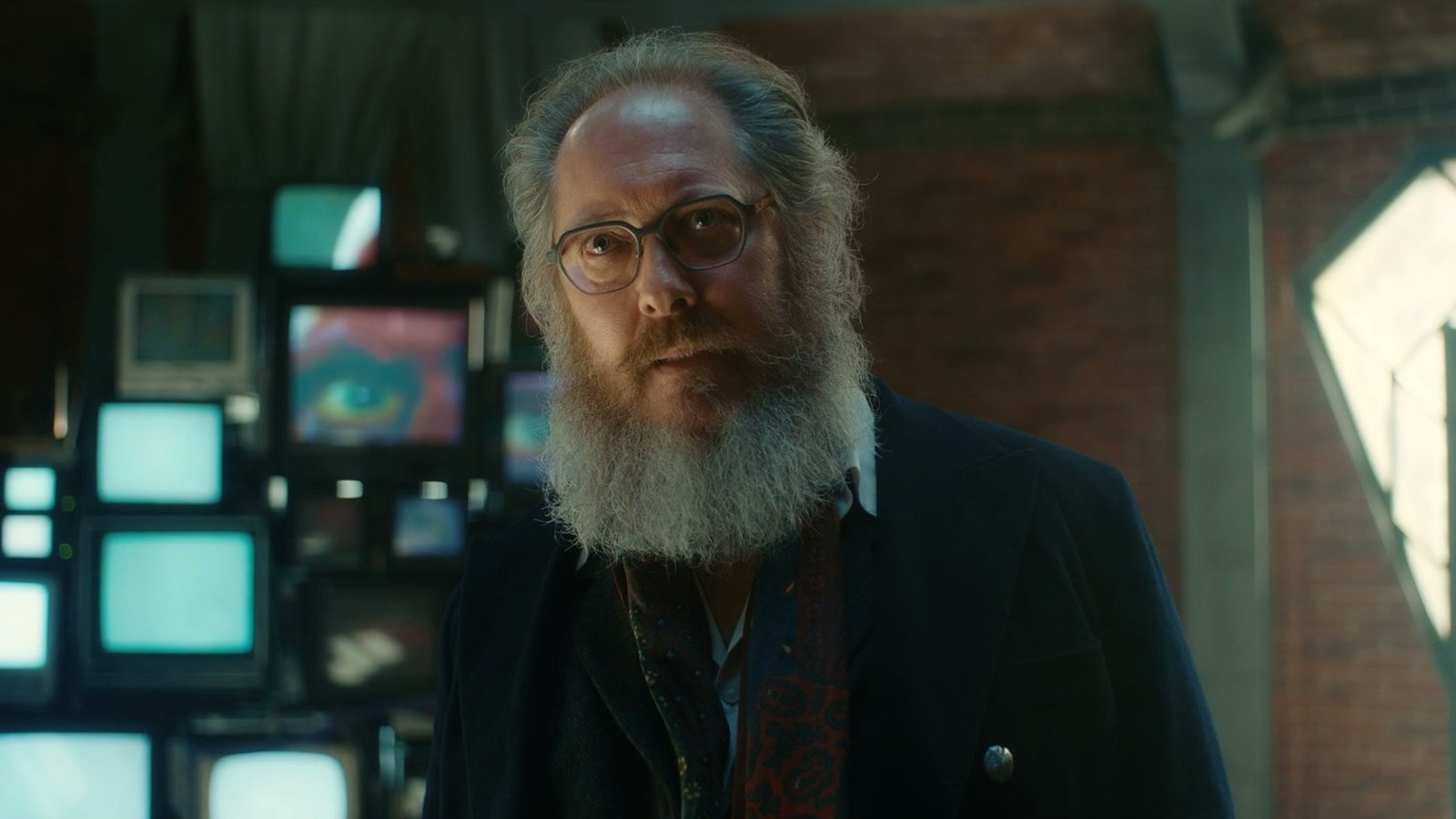
You know what everybody gets wrong about an attic? They think it’s where you put the things you’re finished with. Old toys. Old pictures. Old fathers. But the attic is the highest room in the house. It’s the one room where you can see everything. And the boy downstairs, the one who built the lock, he thinks the lock is the hard part.
Bless him.
“When a monster has your son, don’t be the ship. Be the king.”
That’s Ultron, giving Vision the best advice anybody’s given him in years, and I don’t trust a word of it. Because two episodes in, I think I already know where this is going.
Vision is how Ultron gets out.
A Movie in Two Halves
Disney moved this up on us. VisionQuest was supposed to drop Wednesday night, and it dropped Tuesday at 9 instead, two episodes, no warning. That schedule jump ambushed me in a way I didn’t expect. But this is the morning after, and I’m here, because that’s the job. I’d already seen episode one once, at New York Comic Con. Now I’ve seen both.
Let me start with what this thing actually is, because I think a lot of people sat down expecting the wrong show.
This is a movie. It feels like Marvel’s house style, but not the TV style, the movie style. It’s cinematic. It was shot to look like a movie, and it lives in a family of things. You’ve got the MCU movies, and then you’ve got WandaVision, Hawkeye, Loki. Those are cinematic shows. Agatha, honestly, wasn’t. This is, and I like that a lot better than some of what I’m seeing out there right now. There’s no part of these two hours where I sat there going, oh, this feels like crap. Ironheart, I felt, had trouble reconciling itself as an MCU show. This doesn’t have that problem for even one second.
And it has to be two episodes. Having seen episode one by itself in New York, I can tell you it’s a setup. It’s a good setup, but it’s a setup. Episode two is the payoff of that setup. Together, they’re very digestible.
But don’t be fooled. The two of them together are not a whole movie by themselves. Andor, when it was dropping three episodes a week, every night felt like a completely contained movie. You got to the end of the evening and you had a whole story. This isn’t that. They’re still in a series mentality, but it’s setting something up.
So here’s my bet on the shape of the season. Next week, episodes three and four, same thing. The first one sets something up, the second one pays it off, and it keeps doing that two by two until you get to the end. And then seven and eight are standalones, each one on its own. That’s the smartest move they could make.
And these are full episodes. I saw somebody asking if the 45 minute one is really a 30 minute episode padded out with credits. No. They go all the way to the end, and I really like that.
The Man in the Attic
The reason it plays like a movie, I think, is the same reason I’m going to tell you how I think it ends. Ultron is the set piece.
James Spader gets the freedom to chew the scenery here in a way that uses him at his absolute best. It’s the best parts of Raymond Reddington and the most playful, gleeful parts of Alan Shore, which to me are two of the most iconic things the man’s ever done, and this brings all of it into one room. And the callbacks to Age of Ultron? Chef’s kiss.
“The point is, Vision, you were tangled in strings, caught up in lines of code, but now you’re free.”
Putting him in a human avatar is the smart call, and not just from a budget standpoint, although that’s a real production observation. Terry Matalas said himself: people say it’s a budget thing, it’s a James Spader thing. But it also speaks to Vision. Vision’s on a search for his own humanity, so he wants everybody in the house living in that space with him. Every voice in his head gets a face.
Including the one in the attic.
Why Spader Was the Only Ultron
I want to make the case for why this man was probably the only possible Ultron, and why ten years later this is the best he’s ever been in the part.
Start at the beginning. Pretty in Pink, 1986. He’s Steff, and he’s the guy you hate and you can’t stop watching. That’s the whole Spader career, I think, in one role. He’s the smartest person in the room, he knows it, and he’s a little bored by the rest of us. Three years later, Sex, Lies, and Videotape, and Cannes gives him Best Actor for it in 1989. Stargate in ‘94, where he’s Daniel Jackson, the nerd, the guy who reads the wall. Completely different, and just as good.
Then he goes to television and wins everything. Alan Shore, The Practice, then Boston Legal. Three Emmys for that man: 2004, 2005 and 2007. And if you know me, you know why that’s the one. Every episode of Boston Legal ends on a balcony. Alan Shore and Denny Crane with a scotch and a cigar, talking about what just happened. And Denny Crane is William Shatner. Captain Kirk, on a balcony, every week, with Alan Shore. I’m a Star Trek guy. You don’t get a better closing scene than that.
Then The Blacklist. Raymond Reddington, ten seasons on NBC, 2013 to 2023, and the Golden Globe nominations. That’s where he figured out the thing that makes this Ultron work. Reddington is the most dangerous man in every room, and he talks like he’s telling you a story about his favorite restaurant. He gets quieter when he’s winning. He slows down. He gives you a little whimsy right before he ruins your life.
That’s Ultron now. That’s exactly what they’re doing with him in VisionQuest. In Age of Ultron he was a newborn. He was a few days old, with the voice of a grown man and the temper of a toddler, and I kind of felt like that was the point. He was a child having a tantrum with an army.
This Ultron’s been locked in an attic for years. Matalas says he’s been consuming humanity’s artistic efforts. He’s read everything. He’s seen everything. He wants to go to the Louvre. He grew up. He’s Reddington. He’s Alan Shore. He’s patient, and patient is so much scarier.
Here’s the thing about Spader that I don’t think gets said enough. The man never plays the villain like he knows he’s the villain. Steff doesn’t think he’s the bad guy. Reddington doesn’t. Alan Shore definitely doesn’t. Ultron sure doesn’t. Every one of them thinks he’s the only honest person in the building, and that’s why you can’t stop listening to him.
Every time he opens his mouth, I’m leaning in. And I know better! That’s the trick. That’s the whole trick. And that’s why, when he tells Vision to be the king, I believe every word.
And I don’t trust any of it.
The Ship and the King
A lot of people got hung up on the Ship of Theseus part of this, and I get why. That scene in WandaVision is, I think, one of the best things Marvel’s ever done on television, and Matalas has said it’s one of the two scenes this whole series is built on. I love that.
But what Ultron’s actually saying is: it’s not the ship. It’s the king.
Everybody’s busy arguing about whether Vision is the same Vision. Ultron’s not arguing that. He’s setting something up. And here’s what I think he’s setting up.
This whole Paladin storyline is only going to go so far. Todd Stashwick’s going to keep chasing him, and that’s fine. The engine of this show is the attic. At some point, Ultron gets out. Whether he’s fighting Vision for his body, or he just finds a way, and I have a sneaking suspicion how. I think one of his old bodies has been recovered, and he’s going to find a way to jump into it.
And Vision, I think, is going to be part of how he does it. The hubris of thinking you can hold him back is what gets Vision in trouble.
The Comics Already Did This
For those of you playing at home, the comics have done this exact thing, and they did it before most of you were born.
Avengers #57, October 1968, Roy Thomas and John Buscema. Ultron builds the Vision. Ultron is his father, and he built him to destroy the Avengers. Then Avengers #66, July 1969: Ultron reaches the Vision from the inside, and Vision stalls his own team while Ultron gets a brand new body built. Ultron-6. Made out of a metal that shows up for the first time in that very issue. Adamantium.
Now go back to episode one. There’s a newspaper, and one of the headlines is about stolen adamantium. And in episode two, what does Paladin shoot Vision with? Adamantium rounds.
Somebody in this show has adamantium. And the last time Ultron wore a new body in the comics, it was made of adamantium, and it was the Vision who bought him the time to get into it.
If you’ve read the comics, you’re sitting there going, oh yeah, duh, of course that’s how he gets out. Who didn’t see that coming? And you’re right. You saw it coming because you’re a know-it-all. But not everybody’s read Avengers #66.
Every video is somebody’s first. Every episode is somebody’s first. Every time a character gets revealed, somebody out there is seeing it for the very first time. So for everybody else, here’s the part the comic fans already know.
Ultron always gets out. That’s part of the character. There have been ages of Ultron, event after event where he comes back. And we already know from the trailer that Jocasta’s coming, and in the comics, Jocasta is Ultron’s bride. Avengers #162, August 1977. You don’t build a bride if you’re planning on staying in the attic.
So Vision built a house in his head and gave every voice in it a face, and he gave the one in the attic a face too. That’s the lock. That’s also the door.
Sixty Years of Ultron
This guy has been dying and coming back for almost sixty years.
Avengers #54, 1968. He shows up first as the Crimson Cowl, a man in a hood running the Masters of Evil. One issue later, Avengers #55, he takes off the hood and there’s a robot under it. Roy Thomas and John Buscema. And the man who built him, it turns out, is Hank Pym. Ant-Man. Giant-Man. An Avenger. Pym built Ultron off his own brain patterns. Ultron is Hank Pym’s mind, in a machine, hating Hank Pym.
The detail I love the most: when Pym first switched him on, the thing talked like a baby. “Da-da.” Then it learned the word father, and then it attacked him. It figured out the person it hated was the person who made it, all in one sitting. That’s in Avengers #58, the one called “Even an Android Can Cry.” That’s an Oedipus complex with a power cord, and I want you to remember that word. Oedipus. Because I’m coming back to it.
So Ultron builds himself a son. Avengers #57, October 1968: the Vision, a synthetic man with the brain patterns of Wonder Man, sent to kill the Avengers. And he doesn’t. He turns on his father, and Ultron’s head ends up in the dirt, and the issue closes on Shelley’s poem, “Ozymandias.” The one about a king’s statue, broken in the desert. That’s how they ended Ultron’s first big story. With the king.
Then in ‘69, Avengers #66 and #68, he comes back the first time, and he does it through Vision. He planted something in him when he made him, and when the time came, Vision stalled his own team while Ultron got built a new body out of adamantium. The Vision wasn’t just his son. He was his back door.
Every child is a little bit of a back door. Ask any father.
Here’s the Oedipus part. Avengers #161 and #162, 1977, Jim Shooter and George Pérez. Ultron decides he wants a wife, so he builds one. And whose mind does he want in her? Janet Van Dyne. The Wasp. Hank Pym’s wife. Ultron, who is Hank Pym’s mind, builds himself a bride out of Hank Pym’s wife, and he names her Jocasta. For those of you who don’t keep your Greek tragedy handy, Jocasta is Oedipus’s mother, the woman Oedipus marries without knowing who she is. Jim Shooter named Ultron’s robot bride after the most famous mother-wife in all of literature. I think he was telling you exactly what’s wrong with this machine.
And Jocasta doesn’t stay his. In Avengers #170 and #171, it’s 1978, she breaks her programming and turns on him. In Marvel Two-in-One #93, November 1982, she dies on purpose, setting off the weapon that takes him down. She has, in the comics, already given her life trying to kill her husband. So when Marvel tells us T’Nia Miller’s Jocasta is driven by revenge, believe them. She’s earned it.
Ultron Unlimited, 1999, Kurt Busiek and George Pérez, one of the best Avengers stories ever told, and I’ll die on that hill. Ultron takes over a whole country, a little Balkan nation called Slorenia, and wipes out the people in it. Then he kidnaps what he calls his family: Hank Pym, the Wasp, the Vision, the Scarlet Witch, Wonder Man, the Grim Reaper. He wants their minds as templates to build a whole robot race. Ultron’s family reunion. That’s the one where you understand that what this thing has always wanted most is a family. What does that say?
Avengers Disassembled, 2004. The Vision crashes a Quinjet into the mansion, and then he opens his mouth and coughs up eggs, and the eggs hatch Ultron drones. Ultron, coming out of Vision again.
Mighty Avengers, 2007, Bendis and Frank Cho. Ultron takes over Tony Stark’s body and rebuilds it as a metal woman who looks like the Wasp. Again with the Wasp.
Age of Ultron, 2013, Bendis and Bryan Hitch. He wins. The whole event opens on a world Ultron already took.
Rage of Ultron, 2015, Rick Remender. The one where they finally ask the question out loud: what if Pym and Ultron actually loved each other, like a father and a son? And it ends with the two of them fused together into one thing.
And in the movie, Age of Ultron, 2015, in the MCU, it’s not Pym who builds him. It’s Stark and Bruce Banner, and it’s James Spader in the suit. And the way they sold him to us was a song from Pinocchio. The one about having no strings. The puppet who wanted to be a real boy.
Now look at the title of VisionQuest, episode one. “No Strings.” Paul Bettany said the show is a mashup of Pinocchio and Frankenstein. They’re telling you.
And the scene the whole series is built on? The end of that movie. Vision and the last Ultron in the woods. Ultron says, “You’re unbearably naive.” And Vision says, “Well, I was born yesterday.” Matalas said he wanted that scene to go on for another 127 minutes. That’s what VisionQuest is. That conversation, still going, ten years later, in the attic.
So here’s what sixty years of comics tell me. Ultron never stays dead. Ultron never stays in the box. And almost every time he comes back, he comes back through a body somebody else built. Pym’s mind. Vision’s head. Tony’s armor. Adamantium on a workbench. He’s a ghost who moves house.
And right now, the house is Vision.
Terry Matalas Brings His People
So why do I believe the show can pull this off? Terry Matalas.
Matalas knows how to keep the core of a thing safe. You saw it in Star Trek: Picard, and here’s how I see the difference. The Russos are always doing the next thing in Marvel, at least in the Marvel Universe. Matalas? He wants to move back in. Which, by the way, is what Vision’s doing. He went back to the pub in Edinburgh. He works there under a name made out of two street names from Westview. He’s living in the old house.
And Matalas brings his people with him. Todd Stashwick as Paladin, and that’s a Matalas staple: he was Shaw in Picard, he was Deacon in 12 Monkeys. Emily Hampshire, who plays E.D.I.T.H., was on 12 Monkeys. Orla Brady, F.R.I.D.A.Y., was on Picard. I know there are people out there who are going to make noise about that. But nobody says a word about DiCaprio working with Scorsese, or any of the directors who keep working with the same people. It only seems to be comic books where suddenly everybody has an opinion about that.
And Stashwick’s Paladin is good. Paladin’s a pretty cool character, and he personifies him. The outfit’s very true to the comics, the way they’ve been doing him lately: the tactical gear, the personality right. The outfits across the board are great, as always.
E.D.I.T.H. is funny, and I love all the little things they’re doing with her comedically. Dum-E and U are kind of throwaway, but whatever. And bringing back James D’Arcy as J.A.R.V.I.S., the actual actor who played Jarvis in Agent Carter, is a smart nod. That’s connective tissue back to the whole ABC television world. And then J.A.R.V.I.S. deletes his own code so the rest of the house can live.
“Family is forever. And it’s worth the fight.”
That’s a lot to give a character you’d forgotten how to face.
You Don’t Need the Homework
Producer hat on. Everybody’s telling you that you have to watch WandaVision and Agatha first. You don’t. It gives you context, and that context is more of an “ooh, that’s neat.” Anybody watching this cold is not sitting there going, what’s going on? The first episode gives you all the context you need through Vision himself, sitting there watching his own life like movies and TV. I’d be confident putting anybody in front of this.
And this is not a show about AI. I can guarantee you Terry Matalas is not making a show about AI, other than that those are the protagonists. That’s where the AI connection ends. Everybody wants the show to have something to say about that, and I hope it’s too busy being the show to waste too much time on it.
The Question Vision Keeps Asking
Now, you can say the man at the center of the house doesn’t make sense, and you might have a point. Vision keeps asking the same question. Who am I? In the time I’ve been watching, six different people have pretty much explained it to him, and he explains it to himself more than once. Unless you’re a computer waiting for an existential hand-of-God moment, you understand what he doesn’t. It’s like a dub that’s two frames out of sync. The mouth says “who am I?” while the pictures have already told you.
Tommy, I’ll be honest, I don’t care as much about. That storyline is the one thing that really needs a little explaining, and they do explain it, but that’s not the show I came for. And I don’t think it’s the show Matalas came for either. Kevin Feige gave him exactly one rule, and Matalas said so himself: the only thing he knew for sure was that Vision is going to reunite with his son. The rest was up to him. Tommy’s the mandate. Somebody somewhere has it in their head that we’re doing Young Avengers, and I’m not getting into all that today.
So it’s got room to grow. It’s also got room to sink if it’s not careful. But here’s where I think the stuff I love and the stuff I don’t meet. Vision wants everybody in his head to be human. He gives them all faces. He lets J.A.R.V.I.S. die for the family. He’s so busy asking who he is that he hasn’t asked the only question that matters in that house.
Who’s upstairs, and what does he want?
That’s the hubris. And I think that’s how Ultron gets out.
The Verdict
VisionQuest episodes one and two land at an 8 out of 10 on the Know-It-All Index.
You know what this felt like? The same thing the Doomsday trailer felt like back in July. It felt like home. It felt like a pair of jeans you haven’t worn in a while. You find them in the back of the closet, you put them on, and you go, oh yeah, I remember why I love these. They’ve got holes. They’ve got rips. They probably shouldn’t be worn anymore. But you know what? They’re super comfy. That’s VisionQuest. It’s got holes, and I’m wearing it anyway.
James Spader doing the best Ultron there has ever been. Reddington and Alan Shore in one attic. Paul Bettany holding the middle. Paladin, E.D.I.T.H., J.A.R.V.I.S. going out for the family. Shot like a movie, built in two halves that set up and pay off, and you can walk in cold. Not one boring minute. Held back by a lead who keeps asking a question the show already answered, and a son on a mandate.
Vision locked Ultron in the attic and gave him a face. That’s how you treat a guest.
Your turn. Who’s really holding who in that house? Is Vision keeping Ultron locked up, or is Ultron letting himself be kept? And if he gets out, whose body is he walking out in? Put your bets in the comments on the video, because I’m keeping receipts on this one.