I didn’t expect this episode to work on me.
And I don’t mean work like “I loved it” or “I had a great time” or “I’m suddenly on board with everything this show’s doing.” I mean I stopped pushing back. Which doesn’t sound like much, but for this show, that’s kind of the whole thing.
I’ve been pushing back on Starfleet Academy all season. Not even angrily, just automatically, like my brain’s already braced for it to get slippery, or solve the problem too cleanly, or pull the punch right when it should leave a bruise. And somewhere in the middle of Episode 4, I realized I wasn’t doing that anymore. I was just letting it happen. I didn’t immediately know why, and that’s the part that stuck with me, because Klingon stories aren’t usually the thing that makes me relax. They’re supposed to tighten you up a little. They’re supposed to make you feel trapped inside a code you didn’t invent.
This episode did something else. It got me to agree. And then it ended, and I had that delayed reaction: wait, hold on. Why did I accept that so fast?
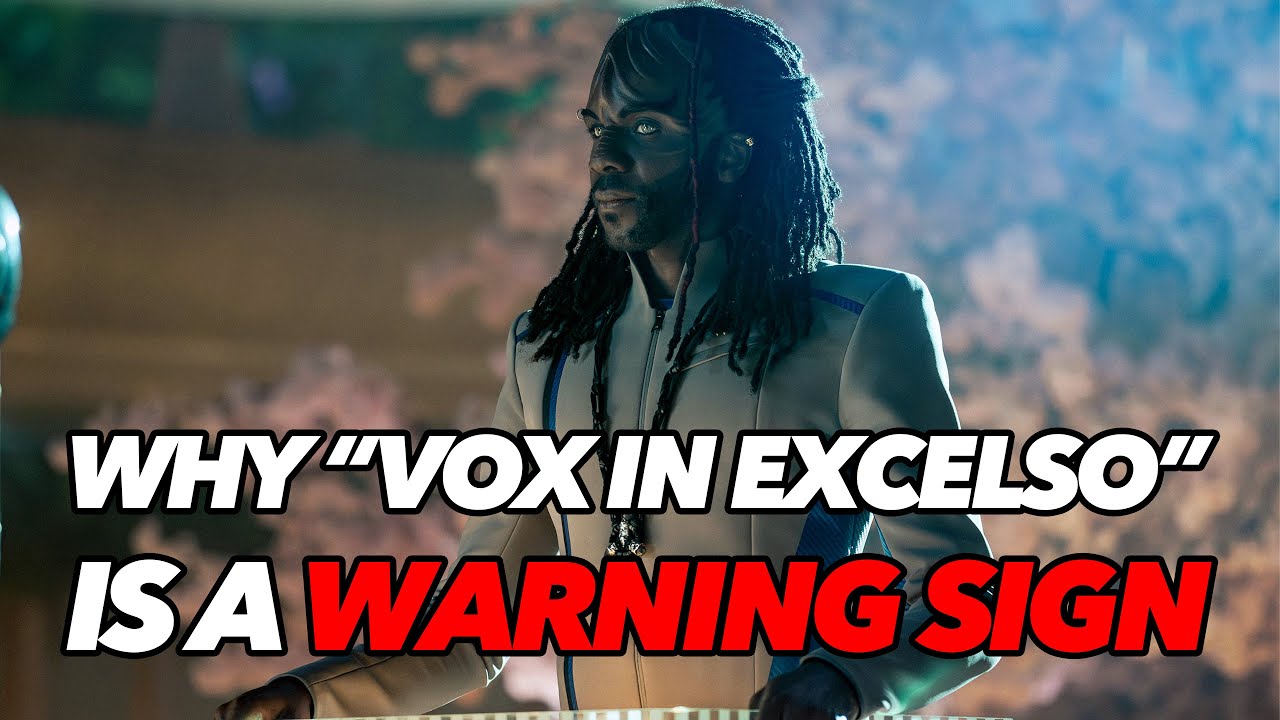
Today we’re talking about Star Trek, specifically Starfleet Academy Season 1, Episode 4, “Vox in Excelso.” And I’ll say this early, so it’s on the record: this is the strongest episode of the season so far. It’s the first time I’ve felt the show hit a real Star Trek question and not immediately flinch away from it. Which makes my reaction more complicated, not less.
The Klingons Work, Immediately
A lot of this episode actually worked for me. The Klingons worked, like, immediately. When we start seeing Jayden’s background, the family ship, the camp, the almost austere, stripped-down way of living, I was in. It didn’t feel cozy. It felt performative, in the right way. It felt like people who’d decided collectively: we’re done bargaining with outsiders. Don’t touch us. Don’t fix us. Don’t reinterpret us and call it help.
And for a second, I thought, okay, we might actually sit in this for a bit. We might finally let Starfleet deal with being rejected by a culture that doesn’t want Federation solutions.
Then the episode starts moving. Not fast, exactly, just decisively, emotionally. It introduces something with weight and then almost immediately starts shaping it into something manageable. I didn’t clock it right away, because the episode’s confident. It looks good. It knows what it’s doing. It’s not apologizing for itself, which is new for this season.
So I did what any good Klingon guy would do: I leaned in. And then I caught myself leaning in.
The Moment My Resistance Slipped
There’s a specific moment where I felt it happen. The episode sets up the Klingons as distrustful, prideful, insular. It frames the homeworld question like a real problem: identity, honor, history, all of it. And then it offers a solution that’s clever. Solve the Klingon problem the Klingon way. Give them the homeworld, but frame it as something they fought for, even if the fight’s symbolic, even if it’s rhetorical, even if it’s more ceremony than blood.
My first reaction was: okay, yeah, that’s smart. My second reaction was: why am I okay with that?
Because Klingon solutions aren’t supposed to land clean. Not when honor’s involved. Not when the culture’s built around codes that punish weakness and reward ritual. This is where older Trek would’ve made you sit with the fallout. Somebody loses standing. Somebody accepts the outcome and hates everyone involved. Somebody gets the right result and still walks away diminished.
Here, it works, and it soothes, and I felt myself accept it, fast. That’s the trick of this episode. It earns your agreement. It’s persuasive. It’s rhetorically sharp. And because it’s persuasive, the missing weight only shows up after you realize you went along with it.
This is going to sound like I’m asking for pain just to be cruel. I’m not. I’m describing what Klingon stories usually do to the room. They suffocate a little. Ritual suffocation, the sense that a code can be noble and still be brutal, sometimes especially when it’s noble. So when this episode hit its resolution, what I was braced for wasn’t some big explosion. It was a fracture. Jayden losing standing with his family. The Klingons accepting the deal but making it clear they still don’t trust Starfleet. A choice that works on paper but leaves somebody isolated afterward. Something that sticks.
Instead, the resolution feels cooperative. Everyone’s relieved. We found the good answer. And I get why that feels good. I felt it too.
That relief? That’s a tell.
The Worf Benchmark
This is where Worf kept coming to mind. Not as a nostalgia thing, not as a checklist comparison, just physically. With Worf, you always feel the tightening. You know the right choice is about to make his life smaller, not symbolically, practically. Status goes. Family goes. The ability to explain himself goes. And Star Trek didn’t rush past that. It let him live in that reduced space. It let the silence hang. It let the consequences stay long after the episode ended.
In “Vox in Excelso,” I didn’t feel that tightening. I felt the episode moving toward a solution that would land, and I trusted it to land.
That’s where the discomfort actually lives for me. Not that the episode’s softer. That I softened while watching it. I accepted a Klingon resolution that didn’t demand sacrifice, and I did it quickly. That’s compression, not misunderstanding.
And this is where the structure starts showing. The debate, arguably the only collegey thing in this episode, is a controlled space. That’s not even a criticism, it’s just what debates are: rules, moderation, and an ending. They’re great for articulating positions. They’re not so great for showing what those positions do to people over time.
This is where my filmmaker brain starts clocking the machine. This feels like a show managing tone. Like it’s saying: we’ll do Klingons, but we can’t let it get too suffocating. We can’t let it break the warmth of the Academy. We can’t leave characters sitting in decisions with no clean emotional exit. So the classroom becomes the safety valve. Not in the story, structurally. You can resolve something cleanly and still feel like you tackled a hard issue, and that’s exactly what happens here. It works as television, absolutely, no doubt. But Klingon material isn’t supposed to feel like a takeaway.
Little things start jumping out once you see it. The cleanliness of the various spaces. The lighting that never really lets shadows settle. Even the intimate moments are reassuring; they don’t destabilize anything. There’s also this broader season energy where everything feels a little omnisexual, like every pairing’s possible. I’m not even critiquing that morally, I’m describing the vibe. It’s flirting without consequences. Same with the polycule reveal, if you were paying attention. It lands as information, not lived tension. No awkwardness, no friction. It’s just stated. And it’s the same thing with the Klingon authority figure, who feels completely at ease inside a Federation frame.
None of these kill the episode. They all point in the same direction: smoothness.
I’m not mad at this episode. I want to make that clear. I’m frustrated by it, because it finally reaches for something that could carry real weight. It treats Klingon honor like a structure instead of a costume. Then it sets that structure down before it gets too heavy, and I felt myself appreciate that in real time. That’s what I’m wrestling with. Part of me is relieved the show is finally engaging real Trek questions. Part of me misses when Trek would let those questions ruin somebody’s week.
The Production Audit
So here’s where my brain finally stopped reacting and started auditing. Because once you get past whether this episode worked emotionally, the seams start showing everywhere. Not story seams. Production seams.
When I look at “Vox in Excelso” as a showrunner, what I see isn’t confusion about Klingons. I see a production that’s afraid of its own shadows. They want Klingons because Klingons carry brand weight. They carry legacy, they carry recognition. You say “Klingon episode” and audiences already lean in. But then everything around them is designed to make sure that weight never actually lands.
They move the timeline eight hundred years into the future, which should give them total freedom: new politics, new aesthetics, new cultural language. And they tiptoe around all that. Instead, they dress the Klingons in legacy iconography. Same silhouette, same visual grammar, same shorthand. Why? Because it’s a brand asset. From a showrunner perspective, that’s not bold. That’s hedging. You’re using the thirty-second century like a tax haven for lazy writing. If you’re not going to evolve the visual language, don’t pretend you’re boldly going anywhere new. You’re just rewriting the fine print on a contract the audience already signed.
And this is where Worf stops being nostalgia and starts being a benchmark. Worf isn’t important because he’s old Trek. He’s important because his stories established a standard for how much weight Klingon drama is supposed to carry. When Worf faced a moral crisis, the show didn’t protect the vibe. The camera didn’t rush him. The edit didn’t rescue him. The score didn’t soothe him. You sat in long, uncomfortable shots. You watched the sweat. You watched the silence. You watched a man lose his name, his family, his standing, and then keep living with it. That wasn’t cruelty. It was confidence in the medium.
Starfleet Academy does the opposite. It references the weight without carrying it. That’s the difference between high-stakes execution and reference-heavy execution. Worf-era Trek used the tools of filmmaking to create stakes. Academy uses the tools of filmmaking to avoid them.
Look at the debate scene again, but don’t listen to the dialogue. Watch how it’s shot. Mid shots, clean coverage, safe reaction angles. Honestly, it’s like a TED Talk. This is a Klingon moral crisis, and it’s shot with the same visual vocabulary as a first date scene. That’s not accidental. When you shoot it that way, you’re telling the audience: don’t worry, nobody’s actually going to get hurt here. Compare that to older Klingon material. Long, static takes. Awkward silence. No editorial mercy. You had to sit there while the consequences landed. Academy doesn’t let you sit.
And then there’s the score. This is where my resistance actually broke, and I didn’t really clock it until after. The music during the resolution isn’t neutral, it’s grooming. It’s that hopeful Academy swell, the sound of a problem being solved, not a culture being lived. In older Trek, the music either stepped back, or mourned, or gave you that strong Klingon feeling. Here, the score does the emotional work the script refuses to do. It tells you how to feel so you don’t have to wrestle with it yourself. It’s an audio Band-Aid.
This is also why things like the polycule reveal land the way they do. From a producer standpoint, it’s efficient. Thirty seconds of dialogue, world-building box checked, move on. From a dramatic standpoint, it’s poison. Efficiency kills friction. It kills awkwardness. It kills lived-in complexity. Same with Jayden. You can feel the performance being steered, not toward displaced Klingon, but toward relatable teen. That’s a rehearsal room decision. That’s a directing choice to keep the show broad, accessible, safe.
All of these decisions point in the same direction. Not incompetence. Caution.
So there you go. Now you know. And if knowing is half the battle, you’re halfway to being a know-it-all yourself.
The Verdict
This episode finally asks a real Star Trek question. It finally treats Klingon honor like a structure instead of a costume. It finally gives the show some backbone. But then the production steps in and cushions the fall. The timeline is used as a shield, or a MacGuffin even. The visuals cling to legacy without evolution. The debate format replaces lived consequences. The edit keeps you moving. The score reassures you when it should probably stay quiet, or at the very least pick up a little. The show references weight, but it doesn’t carry it.
And the most unsettling part for me is that it almost got away with it. I went along with it. I felt the relief. I felt the solution land. That’s not failure. That’s a warning sign.
That’s why I’m giving Starfleet Academy Season 1, Episode 4 a 7.5 out of 10 on the Know-It-All Index. Because this is the closest the show has come to real Star Trek weight so far, and because it still uses every tool at its disposal to make sure that weight never gets too heavy to hold.
If you want Star Trek that references its past, this works. If you want Star Trek that risks something the way it used to, we’re not there yet.
Now I want to hear from you. Did this episode feel like a breakthrough, or did it feel like a clean classroom version of conflicts that used to take years to live through? The comments on the video above are open, let’s argue it out. And never forget: everyone loves a know-it-all.