The Furies step into frame and the show stops asking for patience.
The sound hits first: that clicking, that horror-coded insect rhythm that tells you immediately this is not a species you debate with. Then the faces, slightly out of phase, spatially wrong, like the room cannot fully contain them.
And here’s what changed everything for me. The camera does not panic. The shots breathe. The choreography is clear. People are calling out positions, maps are visible, you understand where everyone is.
That is Star Trek. And in that moment, I stopped reviewing this show and started watching it.
We’re talking about Starfleet Academy season 1, episode 6, which I know, I said I wasn’t going to review this show anymore. But this was a good episode. For five weeks I’ve been critical of the show, not because I enjoyed tearing it down, but because I felt like it was insulating itself from consequence. I felt like the 32nd century was cosmetic. I felt like the stakes were theatrical instead of dangerous.
Episode 6 changed that. Not because it was darker. Because it was confident. So let’s walk through the math.
An Enemy That Corrupts Clarity
The Furies are the first enemy this season that feels like an actual problem. They don’t monologue. They click. They screech. They move wrong. Their faces distort like the space around them is slightly misaligned.
That visual phasing effect matters, because Trek normally gives you spatial clarity. You know where things are. You understand the room. Here, the enemy corrupts that clarity. But the show doesn’t. The blocking is clean, the cuts are deliberate, the geography is established. This is not frantic editing hiding weak choreography. This is controlled staging under pressure.
So when Lieutenant Commander Tamaru sacrifices himself, it lands. And yes, my brain made the redshirt joke for about half a second. But the reason that moment works is not irony. It works because the episode did the tactical math in front of you. You know what his sacrifice buys. You know why it had to happen. The show doesn’t cushion it with swelling sentimentality. It lets the space hold. That is editorial bravery.
Then later, when the Vulcan cadet is killed, that lands even differently. Tamaru’s sacrifice is command cost. The cadet’s death is institutional trauma. That’s the Academy losing one of its own. And that’s when you understand the training wheels are gone. For the first time this season, the show doesn’t protect itself.
The 32nd Century Finally Behaves Like a Century
I’ve said repeatedly that the show felt disconnected from the future it claimed to inhabit. Episode 6 is the first time the century behaves like a century. The technology feels advanced. The singularity drive feels dangerous. The ship graveyard feels like history instead of a set. The threat feels post-Burn.
And the Lanthanite lore about how Ake experiences time actually lands. Not as trivia, as character texture. She talks about how, since Lanthanites essentially live forever, she can lose sight of when things begin and end, and how without the beginnings and ends of things you could get caught in a trauma loop that just goes on and on forever. It reframes her leadership. It reframes her patience. It reframes her willingness to compromise. That’s lore that functions.
The season’s villain finally becomes real, too. For five episodes, he felt like posture. This time, he feels strategic. The alliance breathes long enough to feel plausible, which makes the betrayal inevitable instead of theatrical. That’s pacing confidence.
And T’Rina’s arc works because it costs her. Removing the suppressor is not romantic empowerment. It’s catastrophic. It saves everyone and leaves her in a coma. That’s consequence. Sam is injured. A cadet dies. A command officer sacrifices himself. Ake compromises her ethics. No one walks away untouched.
The Honest Part
I went into this episode prepared to keep critiquing. And somewhere between the Furies arriving and Tamaru’s sacrifice, I realized I was leaning forward. I wasn’t bracing. I wasn’t drafting arguments in my head, waiting for my turn to speak, if you will. I was watching. Like a Star Trek fan. And it felt very, very good.
Now, this episode’s not flawless, okay? Caleb’s resurfacing animosity toward Starfleet feels abrupt given how sidelined he’s been. The opening intimacy scene is way more explicit than I think was necessary. And I can make a case that some of the supporting roles risk redundancy.
But none of that undermines the spine. Because the spine is danger. Not shock value. Danger. A competent enemy. Clear geography. Earned sacrifice. Leadership under strain. Real cost. If this episode had aired as episode 2, we’d be having a completely different conversation about this series.
The Real Test Is Next Week
This season will live or die by how it responds to episode 6.
If next week we reset emotionally, if T’Rina wakes up and the coma becomes a footnote, if the Vulcan cadet’s death fades into background noise, if the villains drift back into theatrical villainy, then this was a spike. A strong spike, but a spike.
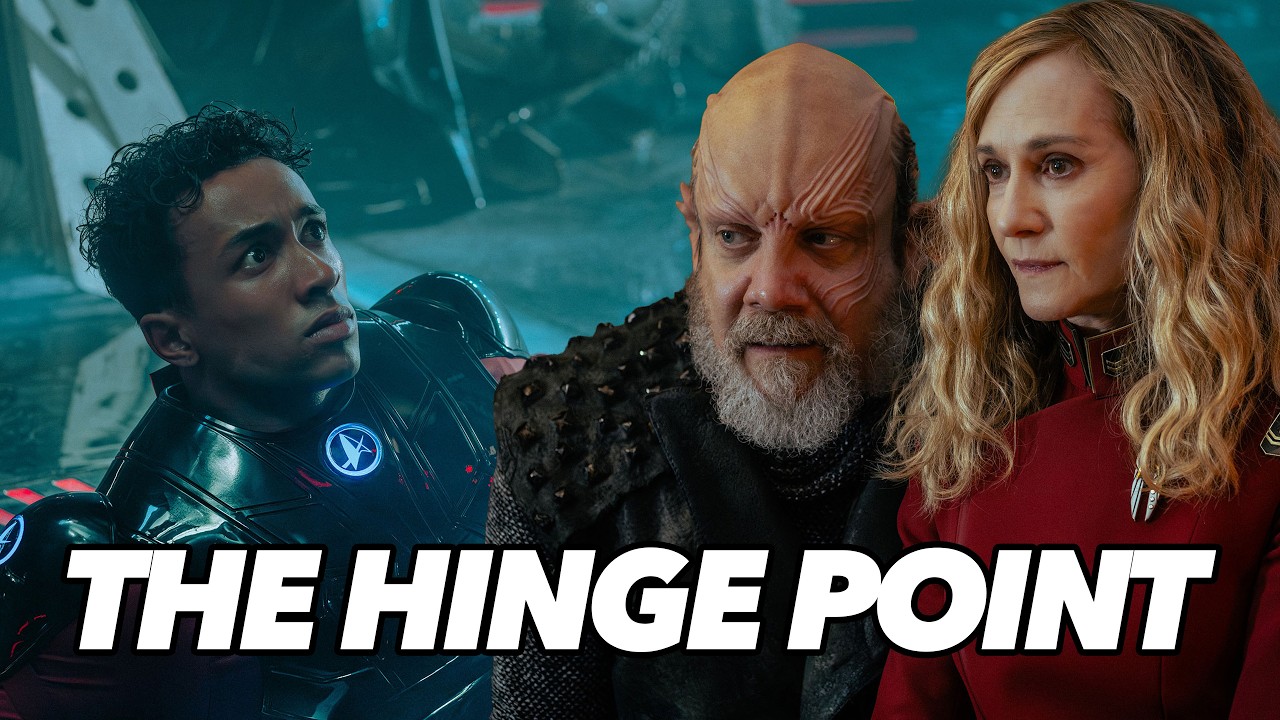
If instead we sit in the trauma, if Caleb carries what he witnessed, if Ake’s compromise scars her command, if the Academy shifts because it just watched one of its own die, and if the Federation establishes a new baseline for threat, then this episode was not just a good episode. This will be the hinge.
For five weeks, the show has felt experimental. Episode 6 felt inevitable. And that is a completely different category of storytelling.
The Verdict
So there you go. Now you know. And if knowing is half the battle, you’re halfway to being a know-it-all yourself.
What is the Know-It-All Index for Starfleet Academy episode 6? The production trusted its horror language. The editing trusted stillness. The blocking trusted geography. And the writing allowed cost. The villain became strategic instead of symbolic, and the 32nd century, for me anyway, finally felt lived-in instead of referenced. Most importantly, I stopped reviewing and started watching. That’s not nostalgia. That’s craft alignment. And that’s why I’m giving this episode a very well earned 9.5 out of 10.
If you think I’m overreacting, tell me why. If you felt some of the same shift when the Furies arrived, I want to hear it. And if you’re still skeptical, I think the real test is next week. I know I said I was done reviewing this show, but in for a penny, in for a pound. I can’t put my foot in it last week and not come back this week and say: hey, man, good work. This was excellent. I hope next week stands shoulder to shoulder with it.
Agree? Overreaction? Let me know in the comment section on the video.