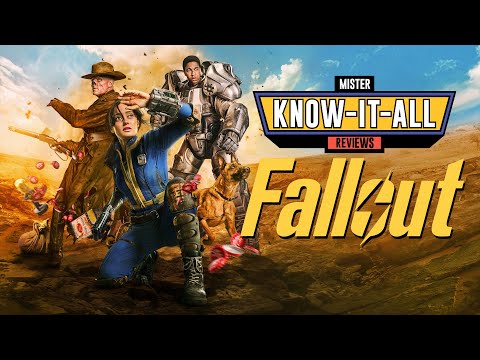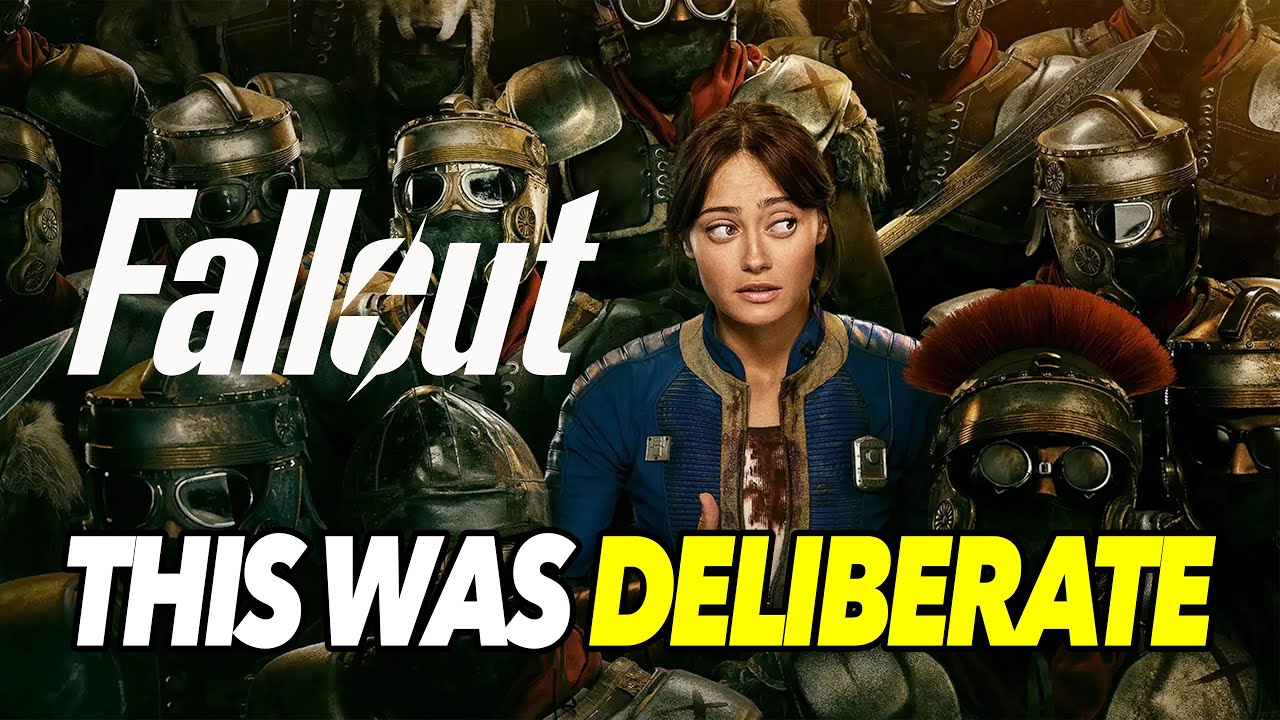
Somewhere in the middle of this season, Fallout did something that should have annoyed me.
Not in a vague, internet way. Not in a “that’s not how it works” way. In a very specific, gut-level way. A place I recognized was just gone. No build-up, no branching outcome, no sense that if somebody had made a different decision earlier it might still be there. It wasn’t framed like a tragedy. It was framed like reality.
My first reaction really wasn’t thoughtful. I wasn’t analytical. It was: you can’t do that.
Oh, no, no, no, no.
That feeling stuck with me longer than I expected it to. Long enough that I couldn’t just shrug it off as bad writing, or a bold choice, or whatever label usually makes discomfort easier to dismiss. Because the more I thought about it, the more I realized the problem wasn’t what the show did. It was the way I expected it to behave.
What’s up, my know-it-alls.
The Rule Fallout Never Followed
I want to back up for a second, because this matters. I understand why people are frustrated with Fallout. I really do. If you’ve played the games, you’ve invested time, thought, and identity into how that world unfolds. Your choices mattered. You lived with the outcomes. You probably have a version of Fallout that feels like yours. So when the show makes a decision that steamrolls past all of that, the instinctive response is, “That’s wrong.”
That reaction makes sense, completely. It’s also where I was starting from.
What I didn’t realize yet was that I was holding the show to a rule Fallout itself never followed.
I kept trying to map what I was watching onto a timeline. Trying to reconcile it with outcomes. Trying to figure out which ending this was supposed to be honoring. And that approach kept breaking. Not once. Consistently. Every time I thought I understood the logic the show was operating under, it did something that didn’t fit, and not in a messy way. In a deliberate way.
That’s when it finally hit me. Fallout wasn’t failing to follow canon. It was refusing to pretend canon ever worked the way I wanted it to.
Fallout was never a single story that branched. I’d argue it was a system. And especially in the Fallout universe, systems don’t care what you prefer.
Season Two makes that clear almost immediately, if you stop asking it to behave like prestige TV. Lucy and the Ghoul are chasing Hank. That’s the goal on paper. It’s clean. In practice, everything gets in the way: vaults, side conflicts, old experiments that won’t die neatly into the main plot, factions that complicate things instead of clarifying them. The story doesn’t move in a straight line, because Fallout never does.
In Episode One, that pre-war mind control demonstration isn’t there to explain lore. It’s there to show you how the world thinks. Control first, disposal second, no room for agency once the system decides you’re expendable. So later, when Lucy finds that survivor in Vault 24 and hears the warning lights before the explosion, the show doesn’t stop to connect the dots for you. It lets the dots connect themselves.
That’s how Fallout teaches you. You discover the rules by surviving them.
Shady Sands Is a Consequence, Not a Monument
Then Episode Two drops Shady Sands, and this is where everything really breaks for people. Because Shady Sands isn’t just a location. It’s history. It’s memory. It’s something players built toward, defended, protected.
The show doesn’t treat it that way. It treats it like a consequence.
Watching that, my reaction wasn’t philosophical. It was irritation. Disorientation. That sense of something being taken away without permission. And I think that’s the part that matters, because Fallout has always done that. The games don’t warn you when something important becomes irreversible. They let you find out afterward, when it’s too late to reload without losing hours of progress.
The show has recreated that feeling. And once I stopped fighting it, once I stopped demanding an explanation up front, the logic of it became disturbingly clear.
Hank MacLean didn’t destroy Shady Sands because he’s evil in a cartoon sense. He did it because the Vault-Tec worldview survived the apocalypse intact. Order over people. Control over morality. Stability over accountability. That logic didn’t die with the old world. It was just lost for a while. Its marketing department took a hiatus.
Fallout has always been about what happens when systems outlive the people they were supposed to serve.
Lucy and the Ghoul Are Two Different Runs
This is where Lucy and the Ghoul stop being characters and start being something more familiar. They’re player archetypes.
Lucy is the run where you try to stay clean. You help people, you follow the rules, you believe there’s a way through this without becoming something you hate. And it works, until it doesn’t. Lucy helps a wounded traveler in Episode Two. It’s the right call. It’s also the decision that gets her captured.
Episode Three doesn’t soften what happens next either. Her crucifixion isn’t framed as heroic or transformative. It’s ugly, it’s humiliating, and it leaves damage behind. She doesn’t come out stronger. She comes out altered. Slower. Dependent on pain meds. Less certain of where her line actually is.
Doing the right thing doesn’t guarantee a good outcome. It just guarantees you’ll have to live with it.
The Ghoul represents the other run. The one where you already learned the world doesn’t reward decency, where survival means compromise, where you make deals you don’t like because the alternative is a lot worse. He trades information to the Legion. He rigs an entire camp to explode just to escape. And it works.
The show doesn’t celebrate him. It doesn’t redeem him either. He’s tolerated because he’s effective and isolated because of it. Alive, but not at peace. That tension never resolves, because Fallout never resolves it.
You don’t win Fallout. You endure it.
Maximus and the Danger of Doing the Right Thing
Maximus is where this philosophy becomes impossible to ignore.
He acts on instinct. He believes doing the right thing in the moment should count for something, and I’d argue that in another show, it would. In Fallout, it destabilizes everything. He saves innocent lives and fractures the Brotherhood. He kills Hartness to prevent a massacre and triggers more chaos. His attempted coup collapses because conviction isn’t the same thing as preparedness.
Watching that isn’t satisfying. It’s uncomfortable, and that’s intentional. Fallout treats moral action as dangerous inside systems designed to resist change.
That’s not nihilism. It’s realism.
New Game: Why Season Two Behaves Like a Sequel
And this is the point where everything finally clicked for me. Todd Howard’s New Game philosophy isn’t marketing language. It’s the key to how this adaptation works.
Season Two doesn’t behave like a retelling. It behaves like a sequel.
Caesar (or Caesar, whichever way you want to say it) is dead. The Legion is fractured. The NCR is wounded but not erased. Robert House exists as a looming presence, not a solved problem. That’s exactly how a new Fallout game would treat legacy factions. They’re variables, not relics.
The show isn’t asking which of these endings you chose. It’s asking what the world looks like now.
And that’s why this works even if you never played the games. I don’t need to know that Shady Sands meant something to everybody in order to feel its loss. I didn’t need a wiki entry to understand the Legion. I didn’t need to recognize every New Vegas reference in order to feel that it was dangerous.
The show taught me the world the same way Fallout teaches players. Through exposure. Through consequence. Through curiosity. What we call show, don’t tell.
And that curiosity is what sent me to the games. Not nostalgia. Not loyalty. Curiosity.
Even the craft choices support this without announcing themselves. Real sets, physical creatures, enhanced by CGI instead of replaced by it. When Lucy and the Ghoul enter New Vegas, it doesn’t feel like a reveal. It feels like walking somewhere you might not be ready for.
That’s Fallout.
Faithfulness Was Never About Outcomes
So when people say the show isn’t faithful, I think they’re measuring by the wrong thing. Faithfulness in Fallout was never about locking down outcomes. It was about preserving behavior. The wandering. The uncertainty. The sense that the world doesn’t care what you wanted to do, or what you thought you should do.
The season stopped asking me to map it and forced me to experience it. Once I accepted that, I stopped arguing with the show and started following it.
That’s when it clicked. That’s when Fallout started feeling like Fallout again, and that’s the keenest part of this whole thing.
Where Tonight Left Everybody
Tonight’s episode is the end result of that journey. We watch Lucy make the hard choices and start to understand what they cost. She kills the man who had stolen the store, if that’s a thing you can even do out here. Then somebody asks her whether she knows who she is, and she says no. No idea. No clue.
And she doesn’t. She’s losing herself.
So she goes back to the one thing she thought was safe, and the Ghoul has betrayed her. She knocks him out. He gets stabbed. Who knows what his outcome is. And at the very end of the thing, Hank shows up, and I have no idea how twisted he’s going to end up being.
So there you go. Now you know, and if knowing is half the battle, you’re halfway to being a know-it-all yourself.
I was going to do a whole review this week, an entire recap like I normally do, and then I realized something. I love this show. I love what it’s doing, and I appreciate the way it’s doing it. So I wanted to sit on that topic for a minute instead. Because at the end of the day, I’m just impressed by the entire series and what they’ve managed to pull off.
Hopefully you are too.
What are your thoughts on the season so far? Are you still measuring this thing against your own playthrough, or has it stopped being a canon problem for you the way it stopped being one for me? The conversation lives in the comments on the video above, and I cannot wait to talk about next week’s episode.