There’s a moment early in Wonder Man where I stopped leaning back. Not because something big happened. Nothing blows up. Nobody walks in with a surprise cameo. Honestly, they kind of telegraph all the cameos.
It’s an audition. The camera doesn’t cut when it normally would. The edit just stays. No music, no release. You can hear the room, the air, the chair shifting, people trying not to react. And Yahya Abdul-Mateen II does this thing where he almost smiles. Not a movie star smile. A survival smile. The kind you do when you realize the room’s already decided and you’re just trying to get out with your dignity intact.
That’s the moment I said out loud, to nobody, “Oh, they’re not going to save him.”
And once a show tells you it won’t give you editorial mercy, you start paying attention differently.
We’re talking about the full season drop of Wonder Man under the Marvel Spotlight banner. Ahead of time: this is not a recap. I’m not walking you through episodes, and I’m not here to explain lore like we’re studying for a test. I want to talk through what I noticed in real time. The thing that made my own skepticism fall apart.
Because I didn’t come into this show generous. I came in watching for tells: flat lighting, overcutting, jokes stepping on scenes that should have been allowed to sit. The shortcuts. And Wonder Man just doesn’t do that, which puts it in a weird position, because it ends up indicting everyone. The people who want Marvel to fail and the people who clap no matter what. This show doesn’t care about either of those groups. It just does the work.
Powers as a Condition, Not a Gift
Most Marvel shows explain the world. This one doesn’t. It lets you feel boxed in. You don’t need a speech about the Dorman clause to understand it. You feel it in how Simon moves, and in how the frame treats him like he’s already one mistake away from being done.
Simon Williams isn’t just a struggling actor. He’s an actor under pressure from a system that sees power as risk. And the show never really stops to underline that. It builds it into the blocking. Look at his apartment. It’s tight. Corners everywhere. You see the ceiling more than you want to. He’s rarely centered; he’s pushed to the edges. That’s not accidental. And Yahya plays into it: shoulders slightly hunched, jaw tight, always holding something back, like if he relaxes too much, something’s going to leak out.
That’s the core idea of the show. Powers aren’t a gift here. They’re a condition. And the Dorman clause turns that condition into a career-ending liability. That’s the inversion. That’s the engine that fuels this entire thing.
Simon’s connection to the old Wonder Man movie isn’t nostalgia bait either. It’s the last place his life felt simple. Watching that movie with his dad wasn’t about superheroes. It was about safety, belief, someone telling him he could be something. So when the remake comes up, it’s not just a job. It’s a chance to touch that feeling again.
Then the show puts Eric Williams in the frame, and this is where it gets smart. Eric isn’t jealous. He isn’t cruel. He isn’t framed as wrong. He’s stable. Insurance job, predictable life, calm lighting, clean blocking, everything functional. And when Simon steps into that world, you can see he doesn’t fit. He stands when he should sit. He hovers. He leans like his body doesn’t know how to exist inside something safe. The show isn’t telling you Simon’s choice is noble. It’s showing you it’s incompatible with safety. That’s way more honest.
Damage Control as a Load-Bearing Wall
The Department of Damage Control is one of the smartest uses of authority Marvel’s done in quite a while. They aren’t villains. They don’t posture. They’re just there.
When Agent Cleary shows up, the camera treats him like a load-bearing wall. He doesn’t move much. He doesn’t explain himself. He doesn’t really need to. And the sound design helps: no ominous hum, just LA noise, traffic, HVAC, footsteps, normal life continuing. That’s what makes it unsettling. They’re not here to fight Simon. They’re here to close the file when it’s time.
So every scene Simon’s in becomes a balancing act. Not because something’s about to explode, but because someone’s watching.
Editorial Mercy
This is the phrase that unlocked the whole series for me. Editorial mercy. That’s when a show cuts away too soon, or drops a joke, or lets the music tell you how to feel so you don’t have to sit in discomfort.
Wonder Man doesn’t do any of that. It lets moments land ugly. It holds reaction shots longer than comfort. It lets silence sit there without apologizing for it. You see it in the auditions. You see it in failed conversations. You see it when Simon wants to recover and can’t quite get there. The show doesn’t rush to make him cool again. That’s direction. That’s editing. That’s intent.
People are going to say this show has heart. Sure it does. It absolutely does. But heart isn’t why it works. It works because every department behaves like the rules are real. Dorman clause equals pressure. Damage Control equals surveillance. Power equals exposure risk. So the tension never disappears. Even in quiet scenes, you’re not wondering if Simon can win a fight. You’re wondering if he can get through a room without being seen as himself.
That’s why the show stays tense without going big.
Trevor Slattery, Played Straight
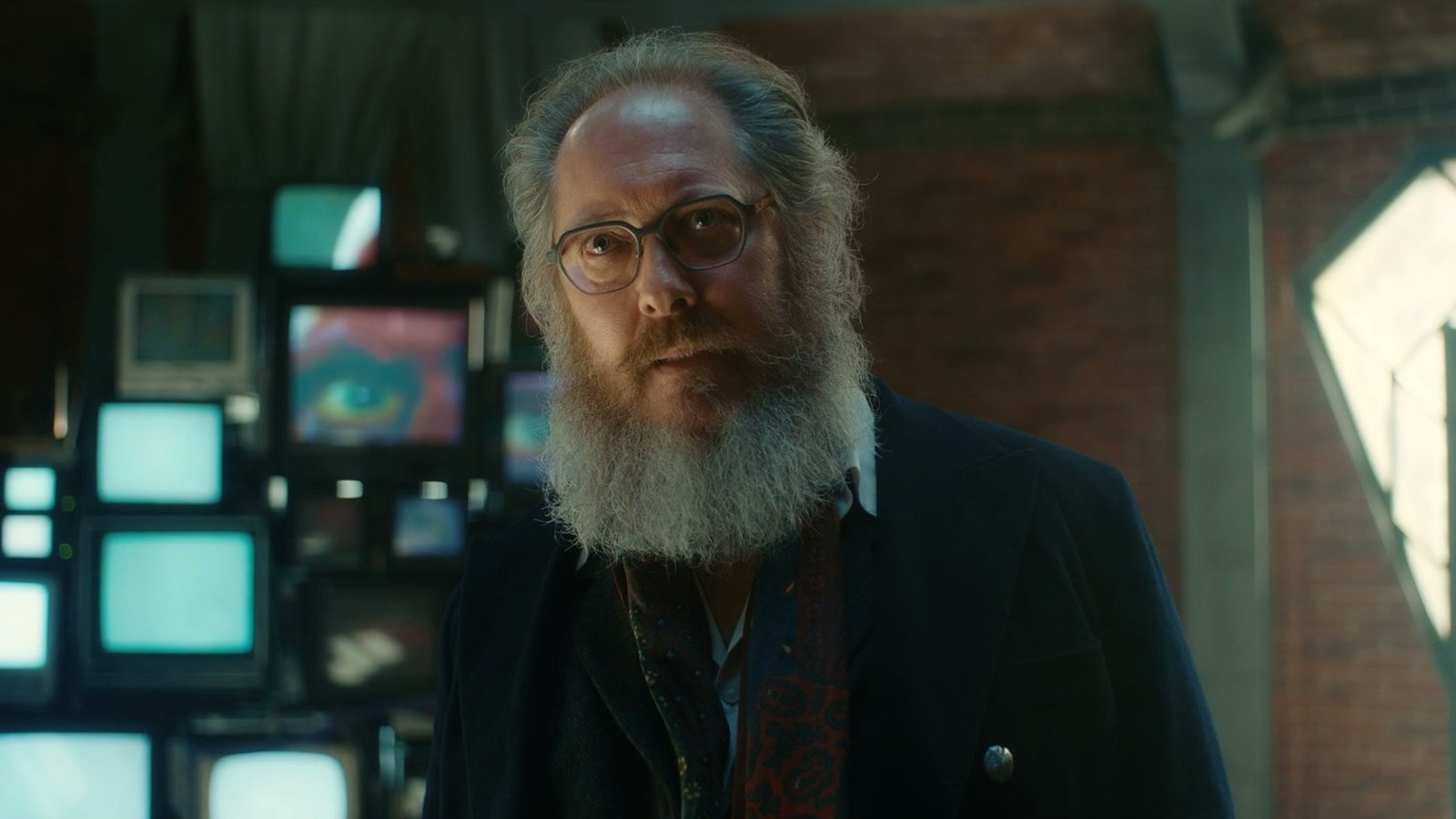
Trevor Slattery shouldn’t work here. Historically, he’s irony. A joke layered on a joke. Ben Kingsley doesn’t play him that way, though. He plays him tired, thoughtful, careful, and the camera treats him with respect. It lets him be still. It lets his face carry weight.
You can see the difference between Trevor performing and Trevor being honest. His eyes dart when he’s playing a part, and they settle when he’s not. That’s not an accident. That’s a choice. And it tells you what show you’re in.
Then there’s the callback moment. Just a callback. “We both got callbacks for Wonder Man.” Most shows would spike the dopamine: music, movement, celebration. This one doesn’t. The edit holds. Yahya’s face goes through about five thoughts in two seconds. Relief, fear, guarded hope, don’t trust this yet. Kingsley lets joy flicker, then shuts it down like he’s learned what happens when you celebrate too early.
That’s actor work, man. That’s restraint. That’s when I stopped waiting for the show to mess it up.
The Dorman Episode and the Powers
The Dorman episode isn’t lore. It’s a threat. Black and white strips the shine off of everything. Faces get harder. Lights get crueler. Hollywood stops looking romantic. You’re not watching backstory. You’re watching what happens when the system decides you’re no longer useful. So when we come back to Simon, the pressure is already there. You don’t need it explained. You’ve seen the end of that road.
And when Simon’s power shows up, it doesn’t feel cool. It feels like something leaking. Handheld camera, messy energy, no heroic framing, no digital gloss, no hero poses. The show keeps the environment grounded. You feel the aftermath. You feel the damage. If the powers looked fun, you’d root for exposure. Because they don’t, you fear it. That’s the point.
A lot of Hollywood satires laugh so they don’t have to care. This one doesn’t. It criticizes the industry without pretending the dream is stupid. That’s hard to do, especially coming from the biggest machine in the room. And somehow it works, because it keeps coming back to the cost.
Quick note on the casting, since I know it’s coming up in the comments: it works because it’s 100% performance first. If you’re looking for paint accuracy, you’re shopping for a toy. I’m watching a character.
The Mandarin Goes Back On
When Trevor puts the Mandarin back on, the show doesn’t celebrate him. The camera doesn’t make him bigger. The lighting doesn’t turn him heroic. It frames him like someone stepping into something permanent. Kingsley plays it like a man choosing the worst option because it’s the only honest one left to him.
And the show doesn’t undo it.
For me, that’s the spine. Everything else gets built around that.
Now, here’s the uncomfortable truth. Marvel didn’t win me back with lore. It won me back with restraint, and that should bother people. If you hate everything Marvel does, this show proves the problem wasn’t talent. If you love everything Marvel does, this show proves your standards have been way too low. This doesn’t ask for patience. It earns attention.
One delivery note: it still feels like a long movie chopped into chapters. Four long episodes might have tightened the whole thing up, or at least brought the story a little tighter together. But that’s a delivery preference, not a knock on the work.
The Verdict
So where did I land? The show refuses editorial mercy. It lets silence, failure, and consequence sit there without smoothing them over. It inverts superhero stakes in a way that’s baked into the filmmaking, not just the script. Yahya Abdul-Mateen II does real physical acting work that the camera trusts. Ben Kingsley proves the show’s intent by playing Trevor with dignity instead of irony. The Dorman episode sharpens the stakes instead of explaining them. And the ending keeps the cost intact.
That’s the biggest reason why I give Wonder Man a 10 out of 10 on the Know-It-All Index.
So there you go. Now you know, and if knowing’s half the battle, you’re halfway to being a Know-It-All yourself.
Tell me where you landed. What scene sold you, or where do you think it lost you? The conversation lives in the comments on the video above. Never forget, everyone loves a Know-It-All.