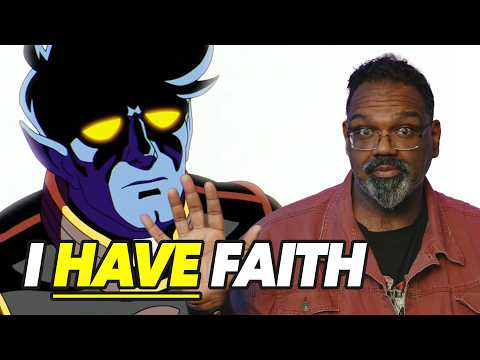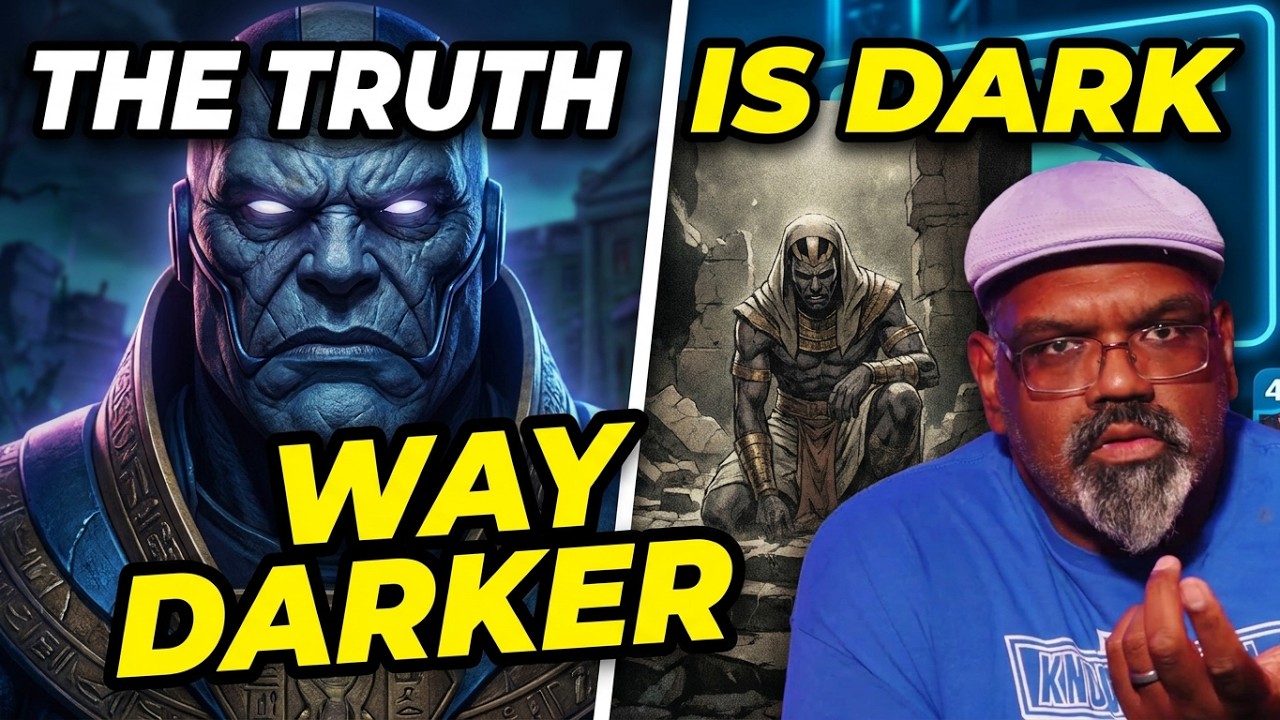
Charles Xavier is on the ground. His oldest friend, the man who spent 30 years threatening to burn his dream to the ground and 30 years quietly protecting it anyway, is gone. Vaporized. And the thing standing over Xavier isn’t gloating. He’s explaining himself. He tells Xavier that nobody who is actually strong takes pleasure in crushing something weaker than they are.
That’s not a villain monologue. That’s a thesis statement. And by the time Rise of Apocalypse Part 2 is over, you understand exactly how right and exactly how hollow that thesis is.
Before anything else, I need to say something, and I’m not going to be smooth about it. The last video did numbers I genuinely was not prepared for. We’re talking 50,000 views, over 300 comments, and this channel went from 18,000 subscribers to north of 20,000 off the back of it. I’ve read almost every single comment, and I’m not going to pretend that didn’t humble me, because it did. Genuinely, thank you.
Quick correction while I’m up here. A bunch of you caught that I mixed up Feral and Wolfsbane in the X-Force cameo. Cat claws versus werewolf, X-Force versus X-Factor. These are two completely different characters, and you’re right. I mixed them up, and I would much rather own that than pretend it didn’t happen.
Now: we’re two weeks deep into the best stretch of television this franchise has ever produced, and this week the show cashed the check it wrote itself two weeks ago. I said last time I wasn’t sure a three-episode premiere block was the right call. I was wrong, and I’m saying so, because that block did exactly what a premiere block is supposed to do. It made me hungry for a single episode to land like an event.
Episode 4 did exactly that.
Here’s what Rise of Apocalypse Part Two is actually doing underneath all that spectacle. This is the origin story the creators of the original 1992 series weren’t really allowed to tell. And in telling it, they made a trade that nobody’s talking about yet: they turned Apocalypse from a man who seizes power into a man who’s been handed a job. This is the best the show has ever looked while making its title character the least in control he’s ever been. That tension, I think, is the whole episode.
The Week Alone With the Cliffhanger
Let’s start with structure, because structure is the reason this episode hit as hard as it did.
The show didn’t drop Rise of Apocalypse all at once. Episode 3 ended the premiere block and left us stranded in ancient Egypt with the timeline in pieces. Then the show made you wait a full week alone with that cliffhanger before handing you the back half. That’s not incidental scheduling, in case you were wondering. That’s a producer deciding a two-parter earns way more by being separated than by being binged. I underestimated that decision last week. I don’t underestimate it now.
Closing a 30-Year Gap
Which brings us to the thing this episode is actually built around: Apocalypse’s origin, done properly, for the first time in the franchise’s history.
At the Tribeca premiere, Slash Film reported that Larry Houston, back as an executive producer after directing the original series, said very flatly that when his team tackled Apocalypse’s stories in the ’90s, the backstory simply didn’t exist yet. They had no choice but to dance around his origin instead of doing anything remotely like telling it. Houston said something similar to Geeks of Color, framing the goal this season as showing the actual process by which a person becomes this. That’s not marketing language. That’s a filmmaker describing a hole in his own filmography that he’s now, 30 years later, finally allowed to fill.
When En Sabah Nur loses his mentor, loses the only home he’s ever known, and gets left alone with a dying civilization and a god’s ultimatum, you’re watching that gap get closed in real time.
And I’ll be honest, I didn’t find that Houston quote in a vacuum. A handful of you had already dug up that same interview independently and brought up the exact same Saturday-morning-cartoon ceiling he’s talked about elsewhere. When a room full of strangers lands on the same read without comparing notes, it’s usually a sign the thesis is sound, not just something I talked myself into.
The Trade: From Genesis to Assignment
But here’s where the episode makes its trade, and it’s the thing I keep turning over.
In the comics, Apocalypse finds Ship. He discovers alien technology, he steals it, and he builds himself into something monstrous through his own will. That’s the whole point of the character. He’s self-made in the most literal sense possible.
This episode doesn’t do that. Instead, the Celestial essence speaks directly to Nur and tells him he will be the end of things. Ship doesn’t get discovered. It gets revealed as something that was already waiting for him, already working for him. That’s a real structure swap, and it’s not a small one. It plays less like Genesis and more like Doctor Who, like watching a TARDIS explain that it has always had this many rooms and this was always where the story was going.
The moment Ship tells Apocalypse it obeys him, the show quietly answers the question of whether Apocalypse chose his path or was cast in it. And once that frame is established, it starts doing work everywhere else in the episode. The origin stops being about a man’s will. It starts being about a man’s assignment. And an assignment doesn’t need to be fought for. It just needs to be accepted.
One comment took that idea further than I did, and I want to give it credit because it’s a sharper version of the point than mine. The argument was that once Nur becomes this, he ends up spitting in the face of both ideologies at once. Not just Magneto’s might-makes-right worldview, but Xavier’s utopian one too. Because here’s a mutant who represents exactly what Xavier’s optimism can’t account for: a future where evolution doesn’t trend toward moral progress, it just trends toward the strong replacing the weak. That’s the determinism argument aimed at both founders instead of one, and I think it’s better for it.
Also, yes, I do see you. Several of you clocked that Apocalypse is wearing a belt with a giant modern letter A on it about 3,000 years before that alphabet existed. I noticed it too. I don’t think this show cares, and honestly, I don’t either. This is a series where a guy just fused his body with alien technology inside a pyramid. Anachronistic branding is not the hill to die on here. Just saying.
The Devil Line
Which brings us, I think, to the line that’s going to be quoted for years. Magneto, gravely wounded, hands off the last of the X-Men, turns to face Apocalypse alone, and tells him the world needs him, it always has. “Perhaps that is why I gladly played the devil, who pushes sinners to embrace the saint.”
That’s Magneto’s entire arc since this show’s first season compressed into a single sentence, and it’s delivered seconds before Apocalypse ends him.
I’ve got to be honest about the fight itself, though. The original series gave Magneto more room to actually defend himself against Apocalypse. This version doesn’t, and the show doesn’t fully explain why. Whether it’s a timeline already being rewritten under our feet or simply spectacle winning out over consistency, I don’t have a clean answer for you, and I’m not going to pretend I do. What I will say is that the emotional truth of the scene survives the power-scaling problem, which is more than a lot of comic books can claim.
Now, not everyone in the comments is where I am on this season, and I want to give that its actual due instead of waving it off. A real number of you think season 2 is moving too fast, juggling too many teams at once, and that season 1’s slower burn let you sit with these characters before the plot moved on. I don’t think that’s a small complaint, and I don’t think you’re wrong, exactly. I think you’re naming a real trade-off: this season is trying to cover roughly a decade of comics in about nine episodes, and something has to give to make room for that. The thing giving is breathing room. My read is that the trade is worth it, for the exact reasons this episode exists. But if you’re feeling whiplash instead of momentum, that’s not a misread on your part. It’s the show actually costing something to watch.
How a Chess Player Loses a Round
One more piece of craft I want to single out before we get to the part I can’t stop thinking about.
Rama-Tut loses. He knows he’s lost. And instead of the show giving us a villain who gets decisively dismantled, he climbs into his little machine, puts on the Kang costume, and tells us pretty calmly that there are bigger battles coming. That’s how you write a time-traveling chess player losing a round without losing the character. Compare that to what a certain other Kang outing in this franchise did with a similar defeat, and you start to see how much smarter this show is being with the exact same source material other corners of Marvel have been fumbling.
And judging by how many of you lost your minds over Q playing a future Kang, I wasn’t the only one who found that casting almost unfairly perfect.
Whose Fingerprints Are These?
Which gets me to the question I can’t fully let go of. I don’t know this for certain, and I want to be honest about that. But watching how cleanly this episode’s structure serves its themes, how precisely the devil line pays off a full season of setup, this feels like Beau DeMayo’s fingerprints are still all over the show.
I know he was let go before the season aired. I know Matthew Chauncey took over the rewrites afterward. And I’m not saying a different writer can’t produce great work. That’s not the argument. The argument, for me, is that Marvel’s other recent series haven’t earned my benefit of the doubt. Across everything these studios have put out lately, I can count the genuinely good ones on one hand, and the one exception I’d point to didn’t come from anyone currently steering this ship. So when this episode plays this precisely, my instinct isn’t “great new voice.” My instinct is “great original blueprint, faithfully executed.”
I could be wrong. I’m telling you where I land anyway. And judging by the comments, I’m not remotely alone. This is, by a wide margin, the most argued-about question in the entire comment section, and the arguments go in every direction. Some of you are convinced this is still pure DeMayo. Some of you have heard secondhand that an early rewrite attempt didn’t land and got walked back toward his original script, which I want to flag clearly as something I can’t verify (I’ve looked), and you shouldn’t take it as fact either. What I can tell you is that the volume of that debate tells you something on its own. One comment put the business case more bluntly than I will: people arguing this much is engagement, and engagement is exactly what a studio is supposed to want more of, not less. Make of that what you will.
The Verdict
So, there you go. Now you know. And if knowing is half the battle, you are halfway to being a know-it-all yourself.
This is an excellent piece of television. They finally told us the Apocalypse origin story the original show was never allowed to tell. They took Ship from a discovery to a destiny and made me argue with a cartoon about free will. They gave us a death scene and a devil line that are going to live in this fandom for years, and a losing villain who knew exactly how to exit with his dignity intact. That’s a 10 out of 10 on the Know-It-All Index.
Thirty years later, this show finally let Apocalypse become everything he was going to be. It just never let him choose it.
Two things I want from you before you go. First: Rama-Tut’s vizier, the one with the headdress running his court while he’s already looking for the exit. The comics have had Apocalypse’s bride storyline for decades, and I’ve got a theory about where this show may be taking her. I’m not confirming anything. I’m asking: did you see it too, or am I three steps ahead of a show that has no intention of going there? Second: since it feels like half of you already have Onslaught circled for the finale, I want the full theory, not just the name. Xavier and Magneto’s connection is supposed to be the engine for that fusion, and Magneto just died in front of Xavier’s own eyes. So how does the show get from where we are right now to Onslaught actually happening?
The conversation lives in the comments on the video above. Bride theories, Onslaught roadmaps, DeMayo forensics, bring all of it. Never forget: everyone loves to know it all.