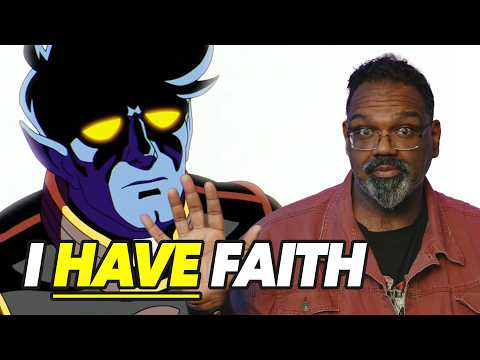
Last week, at the end of my episode 4 review, I asked you a question. And the comment section didn’t just answer it. It out-researched me.
Madam8632 posted a theory that has more likes than some of my videos have views. The read is that Onslaught is coming, but not the way the comics did it. Not Magneto’s consciousness literally fused into Charles. Something subtler: a second personality born from trauma, the way the Hulk is born from Bruce Banner. And then she points out the part I keep coming back to, that we were watching a darker Charles before Magneto ever died.
That’s a good theory. But it’s not the one that made me open this file. This one did.
Karaoke Kings Kingdom wrote that the original cartoon did “the fractured professor personality in the past, which ironically inspired Onslaught, The Dark Shroud.” And then, almost as a throwaway: “the cartoon also did One Man’s Worth, which inspired Age of Apocalypse. They were really cooking back in the day.”
Wherever you are, take a bow, because you handed me the whole video. You’re right. You’re also only half right. And the half you’re missing is the best part of the whole story. A story that starts with a comic book Marvel treated like a mistake for almost 20 years.
Quick word on what this is, because you’re going to be seeing it again. This is the first Know Files. The main show reviews the episode. The Files answers the question the episode leaves behind. Same lens, weekend sized, and built (I mean this literally) from what this community is actually saying. Every screenshot in the video is a real comment from a real person in the Know-It-All Nation. If this channel is going to celebrate anybody’s takes, it’s going to be yours. The Nation asked, the Files answer. This week, the Nation asked about Onslaught.
So let’s open the file.
The Issue Marvel Threw Away
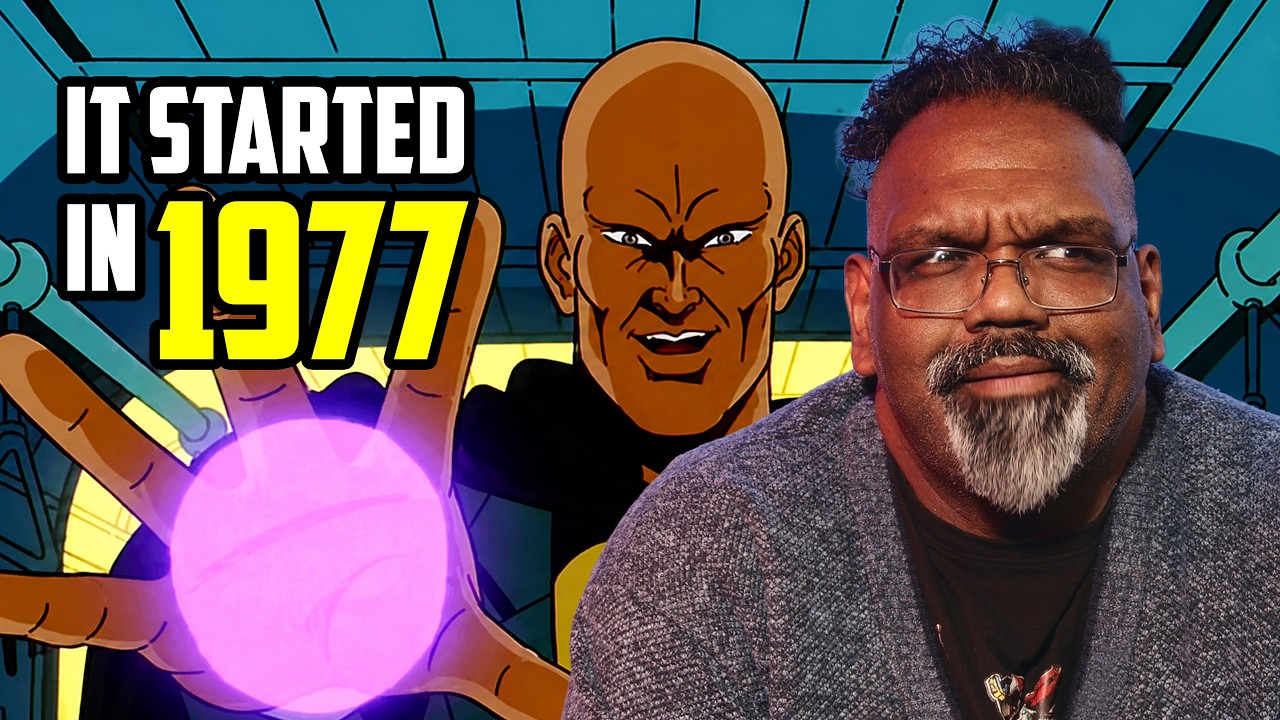
The idea is born in Uncanny X-Men #106, a 1977 issue called (and I promise you this gave me chills when I found it) “Dark Shroud of the Past.” It’s a fill-in, the kind of issue that only exists because a deadline was about to break somebody. And in it, Charles Xavier’s dark side steps out of him and takes a shape of its own. They called it the Entity: every ugly impulse Xavier spends his whole life suppressing, walking around wearing his face.
That’s nightmare fuel. And then Marvel threw it away.
I don’t mean that figuratively. The story was considered so inconsequential that when Marvel went back and reprinted the classic X-Men era for new readers, they skipped it. For decades. The most dangerous idea anybody ever had about Charles Xavier, invented and buried in the same month.
Remember the title, because it’s about to come back.
The Cartoon Remembered
Seventeen years later, somebody remembered. The original animated series gets Season 3’s Phoenix Saga rolling, and part two is titled “The Dark Shroud.” That’s not a coincidence. That’s a receipt.
Writer Mark Edward Edens took that disposable 1977 fill-in and adapted it almost beat for beat: Xavier’s dark half projected outward, loose in the world, hunting the people he loves. And this is the exact leap Karaoke Kings Kingdom made in my comments. The show already did the fractured professor story, and it inspired Onslaught. They’re right. The cartoon reached into the back of the long box and pulled out a story the comics had spent 17 years pretending didn’t exist.
Now here’s the upgrade, and I think it makes the point stronger, not weaker. The cartoon didn’t invent it either. The chain is longer and stranger than any of us had it. The comics invented the idea in ‘77 and forgot it. The cartoon remembered it in ‘94. And the comics wouldn’t rediscover their own idea until ‘96, when they turned it into the biggest villain in their entire universe.
There’s a second thread buried in the same comment that I’m not going to let slip by, because honestly it’s a whole other Files episode someday. “One Man’s Worth,” the time-traveling two-parter, helped inspire Age of Apocalypse. So this one person, in one comment, casually dropped two separate cases of a Saturday morning cartoon pre-inventing the comics’ biggest events. They were cooking back in the day.
And before we leave ‘94, there’s one more thing about that Dark Shroud episode, and I genuinely laughed out loud at my desk when I put it together. In it, evil Xavier torments Wolverine with a hallucination: a fight against three enemies from his past. Sabretooth, Lady Deathstrike, and Deadpool.
Now go look at the guest list for this week’s episode of X-Men ‘97 Season 2. Thirty-two years early, a Saturday morning cartoon accidentally cast the Weapon X reunion. I’m not telling you anybody planned that. I’m telling you the echo is sitting right there, and this franchise is haunted by its own history in probably the best possible way.
Onslaught the Business Decision
So how does a buried fill-in idea become Onslaught? Through the worst two years in Marvel’s history. And I think this is the part where I stopped being a fan and started being a producer, because Onslaught the character makes almost no sense until you understand Onslaught the business decision.
The seed gets planted in X-Men #25 in 1993, and if that issue sounds familiar, it should. It’s the one this show has been adapting since its first season finale. Magneto rips the adamantium out of Wolverine’s body, and Charles Xavier, the most principled telepath alive, crosses his own line, wipes Erik’s mind, and walks away.
Three years later, the comics reveal what that violation cost. In that moment of contact, the darkest part of Magneto’s psyche imprinted onto the dark side of Xavier, the one he’d been suppressing since, well, since 1977. And the two of them fused into something new. Onslaught debuts in X-Men #53, from Mark Waid and Andy Kubert, and for one summer he is the entire Marvel universe. He imprisons Xavier. He captures the two most powerful reality warpers alive. And in the finale, the Avengers and the Fantastic Four sacrifice themselves by throwing their bodies into him to burn him up.
Now put your producer hat on with me and ask the only question that matters: why does the ending kill the Avengers and the Fantastic Four, two teams that barely belong in an X-Men story?
Because Marvel was dying. The speculator market had collapsed, and in December of ‘96, the same season this whole event wrapped, Marvel filed for Chapter 11 bankruptcy. And the company had cut a deal. The Avengers, the Fantastic Four, Captain America, Iron Man, all books with sagging sales, were getting outsourced, handed off to the studios of Jim Lee and Rob Liefeld, the superstar artists who’d walked out a few years earlier to found Image. The relaunch was called Heroes Reborn, and it needed those characters off the board with a clean slate: no memories, new origins.
So the ending of Onslaught isn’t a story beat. It’s a delivery mechanism. The heroes fly into the villain and vanish into a pocket universe because a contract needed them somewhere else.
And the collateral damage was so real. Mark Waid, the man who co-created Onslaught and scripted that finale, was at that exact moment writing a Captain America run with Ron Garney that critics loved and sales were rewarding. Heroes Reborn killed it midstride to hand the book to Liefeld’s studio. Liefeld offered Waid the job of scripting the reboot over his plots, and Waid said no. Liefeld himself got pulled off the books after six issues, and within a year Marvel proposed keeping the whole experiment going only if Jim Lee would personally draw a title. Lee refused, and the thing got quietly wheeled back in.
That’s the context Onslaught was born into. The third draft of the ‘77 idea didn’t fail because the idea was weak. It failed because its author, functionally, was a balance sheet.
The Fourth Draft
Which brings us to right now, because the fourth draft might already be in production, and the evidence is on your screen every Wednesday.
Here’s what makes me take it seriously, and it’s not a rumor. It’s a structural choice this show already made. When X-Men ‘97 adapted X-Men #25 in its first season finale (and that finale is credited to Anthony Silletti and Chase Conley, the exact same writer and director credited on this week’s episode), the writers changed the one beat that matters. Xavier commits the violation. The psychic assault genuinely shatters Magneto’s mind. But then, instead of walking away like the comics, Xavier stays, and he repairs the damage.
Which means the canonical Onslaught origin is foreclosed. This show looked at the mind wipe, the single moment the comics built their biggest villain on, and chose mercy instead. So if Onslaught’s coming, he’s going to need a new papa.
And the Know-It-All Nation already found him. Madam8632 from the top of this piece wasn’t alone. Watch how many of you built the same idea independently, from different directions. Alc nailed the emotional core of it: Xavier, the man who spends his entire life convincing every mutant they’re not their worst moment, calling the oldest of them all a mistake. The most human reaction Xavier has ever been given on screen. And then the turn: the suspicion that this is our first glimmer of Onslaught, informed by Magneto’s psyche.
That’s not one person theorizing into the void. That’s a room full of people arriving at the same door from different angles, different hallways. And as of this week, that door is the only one left open. The show closed the comics door, the mind wipe, and then one season later wrote a scene that opens a different one: a psychic connection at the moment of death. Xavier, who called the oldest mutant alive a mistake. And an episode this very week that conspicuously never once checks on him.
For what it’s worth, the season’s original creator has claimed the removed 10th episode contained an Onslaught reveal. It’s a claim Marvel has never confirmed, and the aired season complicates it, so file it as one account, not gospel. The on-screen evidence doesn’t need it.
One last thing for the file. You know what Onslaught’s biggest adaptation is to this day? A boss fight. The final boss of the Marvel vs. Capcom arcade game back in ‘98. Fifty years of this idea, and its peak on-screen expression is a quarter-eating difficulty spike. It has never once been drama.
So the question was never really “is Onslaught coming.” The question is whether the fourth draft finally gets what the first three never had. The ‘77 version had a deadline. The ‘94 version had a Saturday morning ceiling. The ‘96 version had a bankruptcy. Nobody has ever told this story on purpose, with room, with a witness who loved the man falling, with an author choosing it because it’s true instead of because it’s due.
And whether they meant to or not, this show has quietly assembled all three. The most dangerous idea in X-Men history has spent 50 years escaping its own bad drafts. It might have finally found an author.
There you go. Now you know. And if knowing is half the battle, you’re halfway to being a know-it-all yourself.
Here’s what I want from you, and yes, the best answers get put on screen in the next Files. Give me the mechanism. Not the name, the mechanism. If this show builds Onslaught out of that final mind link instead of a mind wipe, how does it actually work, and what’s the first sign we’ll see on screen? You’ve got to convince me. Head to the comments on the video above and make your case. The main show is back Wednesday when episode 6 drops, and if this file did its job, you’re going to watch Xavier’s scenes a little differently than you did last week.
This lane exists because you’re the kind of audience that digs up a 1977 fill-in issue for fun. Keep doing that. Keep asking. The Files will keep answering.
The Nation asked, the Files answered. Now it’s your turn again: give me the Onslaught mechanism in the comments on the video, and never forget, everyone loves a know-it-all.