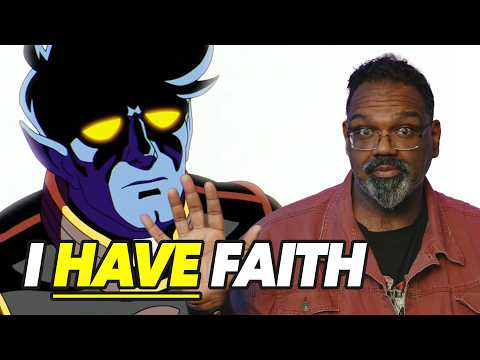
I don’t trust Marvel. I want to be honest with you about that up front.
I’m a guy who ran a production, who sat in the rooms, and who has watched this studio spend seven years turning the most reliable brand in entertainment into a coin flip. The TV has mostly been really rough. The movies have been second rate since Endgame. So my default setting with anything stamped Marvel Studios is arms crossed and show me.
And then last night, an episode of television assembled a strike team in 90 seconds, killed a character in half a sentence, blew up its own loose ends, and asked me to just ride with it. And I did. No resistance, no arms crossed. I rode along like it was 1997 and I had nowhere to be.
The question that kept me up isn’t whether the episode was good. It’s why I let it get away with all of that. Because the answer says something about this show that almost nothing else on television can claim.
This week we’re into episode 5 of X-Men ‘97 Season 2, “Weapon X, Lies and DVDs.” Here’s the shape of it so we’re all on the same page. Wolverine’s back in the present, back on the bone claws, and he’s getting the old band back together: Maverick, Sabretooth, Omega Red’s old dance partner Lady Deathstrike, and Morph riding shotgun. The mission is a Weapon X lab in the Arctic running illegal experiments again. What they find when they get there is a facility that’s already been torn apart from the inside, and the thing that did the tearing did not come from this planet.
That’s the setup, and that’s really all you need.
Running on Credit
Here’s what I actually want to talk about. Every studio has two currencies: money and trust. Money buys you shots. Trust buys you shortcuts. When an audience trusts you, you can skip the setup, compress the introductions, and move at a clip that would get any other show dragged in the comments, because the audience fills the gaps in for you.
This episode is the first one this season that runs almost entirely on credit. Twenty-eight minutes, four decades of comics history, a body count the original series would never have touched, and a pace that asks you to take on an enormous amount of faith. Whether that credit was spent well, that’s the review.
Straight Out of the Long Box
Let me walk you through this the way it actually hit me, because I watched the whole thing in real time with a notepad, and the notepad tells the story.
Ninety seconds in, there’s a helicopter full of killers swapping war stories, and I’m doing the thing where you point at the screen, because I know every single one of these people. And I don’t mean from the show. I mean from the long box. Maverick walks on and I’m 12 years old again holding X-Men #5, the Jim Lee era: Lee on plot and pencils, John Byrne scripting. And here’s the detail that made me put the pen down mid-episode. That issue isn’t just Maverick’s first appearance. It’s the first appearance of Team X itself, and it’s an Omega Red story with Dr. Cornelius pulling the strings. The entire guest cast of this episode comes out of about six months of one legendary run. So when I say this episode shouts ’90s comic books, I’m not describing a vibe. I’m describing the sourcing. The show was born out of Jim Lee’s artwork, and this week it went home.
The title had already tipped its hand, because “Weapon X, Lies and DVDs” is a direct sequel to “Weapon X, Lies and Videotape” from Season 4 of the original series, the episode that established Team X and the idea that these people’s memories were fabricated, planted, unreliable. That episode famously refused to resolve itself. Logan walks away never knowing which of his memories are real, an open question left sitting in the snow for 30 years. Hold that thought, because this episode answers it. And the show knows exactly whose sequel it is, because it jokes about its own title upgrade on screen: Morph marveling that Frankenstein had funding for digital video discs, and Deathstrike sniffing that she prefers LaserDisc.
From there, my notes are just Easter eggs with exclamation points. Sabretooth name-drops Graydon Creed, his son, the future Friends of Humanity founder, and calls him a mistake he should have dealt with, which is about as cold as this franchise gets. Deathstrike snarls “you perverted my father’s work” at Cornelius, and if that read like flavor to you, it’s load-bearing: in the comics her father, Professor Kenji Oyama, Lord Dark Wind, invented the adamantium bonding process. Her entire reason for being in this story is hiding inside that one line. At one point I got genuinely excited that Alpha Flight was showing up. Sasquatch, then Puck, and then no, that’s just Morph handing out cameos. And later, mid-fight, yes, that was Deadpool on screen. In this show. I need a minute with that one, and I think so does the rest of the internet.
Then the green blood pays off, and I actually said it out loud: oh, we’re getting the Brood. That’s kind of awesome. If you don’t know them, the Brood were created by Chris Claremont and Dave Cockrum in Uncanny X-Men #155 back in 1982, and let’s be honest about what they are. They’re Marvel xenomorphs, openly, lovingly, litigiously adjacent to Alien: a hive species with one instinct, survive, that implants itself in the best hosts it can find. So if you felt this episode tilt into straight-up horror in the back half, that’s not an accident. That’s inherited DNA. And the comics already ran this exact play in the Brood Saga, Uncanny #162 through #166, with Wolverine implanted, his healing factor at war with the thing growing inside him. The episode takes that premise and welds it to Barry Windsor-Smith’s Weapon X, the 1991 body horror masterpiece Cornelius crawled out of, and then resolves the infection with the one machine in that facility built for exactly one man.
And here’s the craft detail I can’t stop thinking about, because it’s the smartest adaptation choice in the episode and it goes by so fast I almost missed it. Windsor-Smith told his story from the scientist’s point of view. Marvel Comics Presents #72 through #84 is narrated from inside the lab: Cornelius and the Professor clocking in, clocking out, running Logan’s destruction like a quarterly report. The horror comes from how administrative it all is. The episode inverts the camera. The survivors are the ones reviewing the footage now. The victims of the program sit in the wreckage of the program, watching the perpetrators’ own DVDs, listening to Cornelius describe them as defective because they always remembered. Same archive, opposite side of the glass. That’s a departure from the source material with an actual point of view, which is the only kind I ever ask for.
Now, I can’t tell you how they animated any of this. That helicopter crash looks stupid amazing, and I have never animated a frame in my life, so I’ll stay in my lane. But my lane is the page. I’ve written animation specs, and a half hour like this is, give or take, 35 pages. Go back and count what those pages are carrying: five lead introductions, a mission briefing, a crash, an outbreak, a resurrection, a possession, and an ending with something real to say. That math only works one way, and it’s the way this whole episode works.
Which brings up a distinction I want to make before we flip this thing over. This episode leans on two very different kinds of familiar. The X-Men themselves are a household name now. I’ll put them at the level of the DC Trinity, or on the Marvel side, Spider-Man and Cap: that tier of iconography where the general audience just knows. But that’s not the familiarity this episode is spending. Nobody’s mom knows who Maverick is. This half hour banks on deep-cut ’90s fluency that only some of the audience is carrying. Universal iconography buys a show reach. Era fluency buys it shortcuts. And shortcuts are exactly where we’re headed.
The Bill Comes Due
Here’s the thing about running credit. The bill doesn’t go away. It just gets quiet.
The team assembles in one scene. One. A helicopter, some banter, Morph literally reciting everyone’s relationships to camera like a table read of the series bible: you and Yuriko used to date, you and Sabretooth hate each other, a classic will-they-or-won’t-they kill each other. It’s funny, and Morph’s delivery sells it, but be clear-eyed about what that scene is. That’s the show handing you the character work as a receipt instead of a meal.
The lab is already destroyed when they arrive, so the mystery starts mid-stride, in media res if you will. The episode never has to stage its own inciting incident. Omega Red isn’t introduced. He’s found in a chamber mid-plot, and my actual note here reads “seriously? Omega Red’s awake now?” Because apparently nothing says carbonadium like waking up swinging. And when the paranoia hits and everybody starts accusing everyone of being infected, the only adult in the room is the class clown. I wrote it down in real time: how is Morph the voice of reason in this moment? That’s the episode’s best running joke that isn’t a joke.
Then there’s Maverick, killed by Brood Wolverine off our screen, confirmed in four words. Maverick is dead, and the episode simply proceeds. The original series never did full-on murder, and this week Sabretooth snaps a neck on camera and a legacy character dies in a subordinate clause. We’re doing that now? Right on. And I genuinely don’t mind the darkness. Ross Marquand, who voices both Xavier and Apocalypse, has been telling interviewers all season how dark this show gets. “A lot of people die.” Those are his words.
What I mind is that nobody checks the math. The episode’s exit strategy is an explosion, and explosions are very convenient. We’re meant to assume the facility’s destruction settles everything? That no Brood got out? That the Maverick situation is closed because a sentence said so? That’s not resolution. That’s a writer trusting the audience not to check the math. And Wolverine himself may have steered this entire mission toward the adamantium chamber for his own reasons. Sabretooth says it flat out, that Logan’s headed the opposite direction from the vehicle bay, and the episode never refutes it. The story is asking for faith at the exact moment its lead character is breaking it.
And here’s the part I keep coming back to: I rode along with all of it. Every one of those shortcuts played. Not because they’re invisible, but because this show earned my trust episode by episode across a season and a half, and Marvel hasn’t had that from me in a very long time. This is the first episode that spends more of it than it deposits.
Who Owns the Self
Now the part I’ve been circling the entire time, because buried inside the monster movie is a real idea, and the episode knows it’s there. It just can’t afford to sit in it.
Listen to what those DVDs actually say. Cornelius’ recordings lay out the entire philosophy of Weapon X in two sentences: they always remembered, despite countless memory wipes. In theory, the serum should purge even the most deeply seated memories, resulting in a total loss of identity and, more importantly, total obedience.
Sit with that, because it means the Brood plot and the Weapon X plot are the same idea wearing two costumes. A hive species incapable of divergent thought on one side. A government program trying to manufacture exactly that in mutants on the other. The program erases the memory. The memory holds the self. The self is the only thing these people ever owned. That’s the machine this whole corner of the franchise runs on, and the episode states it plainly, and then has to go run from bugs.
Deathstrike gets the theme’s best delivery: the fable of Tomo, the shape-shifting fox from Japanese legend, aimed straight at Morph. There’s nothing Tomo wouldn’t become to serve his samurai. Unfortunately, it did not work out well for Tomo. That’s a warning about a self dissolved into service, told to the one character whose entire power is becoming other people, sitting next to a man whose past was written by a lab. And in the ending, after the smoke clears, Morph asks Logan the question, and Logan answers: I ain’t like you, Morph. Some of us gotta be one thing. That’s what I’m the best at being. Doesn’t that make you sad? It makes me sad, Logan. Cut to black.
A commenter on last week’s video, PatrickMoore71, pushed back on my read of the Apocalypse two-parter, and it was a good pushback. He argued the destiny angle works as mythic storytelling: the chosen one goes into the desert and receives a divine boon, except this time it’s a destroyer instead of a savior. Fair. And I think this episode is the show answering that same question one level down. Episode 4 asked whether a being can escape a fate the universe assigned him, and the answer was no. This episode asks whether a man can escape an identity a laboratory assigned him, and Logan’s answer is stranger than yes or no. He doesn’t escape it. He enlists it. The claws were forced on him, and he steered a whole mission across the Arctic to get them back.
There’s a comics departure hiding inside that choice that sharpens everything. In the source material, Logan doesn’t take his adamantium back. It’s given back by Apocalypse, stripped from Sabretooth and rebonded to Logan as the price of becoming his Horseman, Death. In the comics, the metal returns as a corruption, a punishment he’s tricked into wearing. The show flips the transaction entirely. Nobody makes Logan a weapon this time. He crosses the top of the world to climb back into the cage himself, because the cage is the only self he recognizes. In the comics it’s a leash. Here, it’s homesickness. That one inversion is the whole ending in miniature, and it quietly chains this standalone episode back to the season’s spine, because if this show ever runs the Horseman play with Logan, it has already shown us he’d walk in willingly. One viewer last week put it perfectly about Apocalypse: he went from getting revenge to being a powerful slave without realizing it. Logan’s the counterweight to that. He sees his cage with total clarity and chooses it anyway.
And that, quietly, is the answer to the 30-year-old question its predecessor left in the snow, to be poetic about it. It no longer matters which of Logan’s memories are real, because Logan stopped caring. He stopped asking. Identity, this episode says, isn’t what you remember. It’s what you keep choosing to be, even when a laboratory did the first draft.
That’s a genuinely strong idea, and I’ll be straight with you about my first reaction, because I owe you that. Watching it live, the ending felt a little trite to me. Sitting with it, I don’t think trite is the right diagnosis. The idea isn’t shallow. It’s starved. It gets the fable, it gets the DVDs, it gets 90 seconds at the end, and every one of those beats is fighting for oxygen against a helicopter crash, an alien outbreak, a resurrection, and an escape. In a 40-minute version of this episode, that Logan and Morph scene is the whole point. In the 28-minute version, it’s a very good coda on a very fast ride. The theme didn’t fail. The clock did.
The Nine-Episode Question
And the clock is the story behind the story this season, so let’s talk about it. Carefully, with the receipts on the table.
Season two is nine episodes. Season one was ten. That’s confirmed. That’s math. Here’s the production history underneath it. Beau DeMayo, who created the show and remains a credited executive producer, wrote season two before departing the production in March of 2024. Brad Winderbaum, who runs Marvel’s animation slate, told Entertainment Weekly the team was honoring Beau’s ideas for the second season: same directors, same cast, many of the same writers. DeMayo himself posted on X that while he did write a lot of season two, he had no involvement in production. No rewrites, no editorial, no post. And in September 2024 he claimed something more specific: that his planned tenth episode was removed, and that it contained an Onslaught reveal pointing toward Age of Apocalypse.
Now that claim is contested, and I want to be precise about its shape. It’s the account of a man describing a room he was no longer in, and the aired season visibly kept a massive Apocalypse arc. So take it as one source’s perspective, not gospel. This week’s episode, for the record, is credited to writer Anthony Silletti and director Chase Conley, the first episode of this stretch without DeMayo’s name on the script. Who did the credited pass, we know. Whose skeleton is underneath, we genuinely don’t.
Here’s why the tenth-episode question matters beyond trivia. A lot of you spent last week’s comments building the same theory independently, and I was reading all of it. The final mind link between Charles and Erik. Xavier watching his oldest friend atomized. Xavier calling the oldest mutant alive a mistake. Half a dozen of you arrived at the same place: that something of Magneto got imprinted on Charles in that moment, and that its name is Onslaught. One of you even pulled the deepest cut in the thread, that the original series already did the fractured Xavier story, “The Dark Shroud,” back in the Phoenix Saga, the very story that helped inspire Onslaught in the comics in the first place. The old show kept pre-inventing the comics’ future. If ‘97 goes there, it will be adapting a story its own predecessor seeded 30 years ago.
So the fork is this. Either cutting episode 10 was triage, a tighter nine-episode season that ends where the story ends, or it was an amputation, the removal of the bridge that turned this season’s trauma into next season’s war.
And I’ll add one piece of pure speculation, mine, clearly labeled, so hold it loosely. The reporting around DeMayo’s original plan says season three was meant to rotate focus onto Gambit. Think about what that tells us. The Cajun’s not dead, folks. Not in any version of this blueprint. And if the destination really was Age of Apocalypse, a Gambit-centric run through that wasteland writes itself. He’s connective tissue. He’s an outsider king in that timeline. There’s even a ready-made move on the board, because when Age of Apocalypse collapsed in the comics, the survivors ported into the main universe, Nate Grey, the X-Man, being the big famous one. A restored Gambit walking that road, taking the Nate Grey role in the show’s matrix: that’s not canon, that’s not reporting, that’s me connecting dots out loud. But I’d argue those dots exist.
And this episode, quietly, by never once mentioning Xavier, by leaving all of episode 4’s grief entirely unaddressed, either has a gap where the aftermath should be or a fuse burning under the floorboards. I know which one I’m hoping for.
There you go. Now you know. And if knowing’s half the battle, you’re halfway to being a know-it-all yourself.
The Verdict
So what’s the Know-It-All Index for X-Men ‘97 Season 2, Episode 5, “Weapon X, Lies and DVDs”? This is a skillfully woven greatest-hits raid on one of the richest corners of ’90s X-Men lore. A genuine horror episode wearing a team-up costume, with an animation glow-up, a killer Morph showcase, a source-material inversion smart enough to put the victims on the right side of the glass, and an ending that touches the franchise’s deepest question, who owns the self, before the clock rips it away. But it spends the show’s hard-earned trust on real shortcuts: a one-scene assembly, a legacy death in four words, a very convenient explosion. And it sits in the shadow of a 10 out of 10. For “Weapon X, Lies and DVDs,” it’s a 7.5 out of 10 on the Know-It-All Index.
Trust is the one asset Marvel can’t animate. And this week, X-Men ‘97 wrote a check against it. The scary part is how fast I signed.
From the Comments
New thing this week, a closing segment answering the best comments from last week’s video, because frankly, you all are cooking and it deserves the space.
First, a callback and a small victory lap. A bunch of you asked last week why nobody in the past seemed bothered that Logan’s adamantium got ripped out of his body. My answer in the comments was that it had to go on the back burner if they were going to survive the past, and that the show would deal with it once they hit the present. This week’s “previously on” was literally the extraction, first scene of the episode. Sometimes the universe is kind.
The Mad Titan called a full Horseman slate: Gambit as Death, off Psylocke’s casket vision and that upgraded Archangel tech, and Magneto as War. I’m not going to pretend I hate this theory, especially after everything we just discussed. Gambit as Death has real textual support piling up. Magneto as War I’m a little cooler on, only because I think the show has bigger plans for what’s left of Erik Lehnsherr. And they may live inside Charles Xavier’s head.
Scholar Hobbits dropped a mini essay, and the line I want to spotlight is the hope that a corrupted Gambit’s redemption runs through Rogue, telling him some things are deeper than skin. If the writers’ room isn’t already sitting on that line, they should be. That’s a free emotional haymaker, and I’m giving it away on a free platform.
And from my own watch this week, a rules question worth settling: Morph appeared to copy powers during that fight, which is a notable upgrade over classic Morph. Whether it’s a permanent power evolution or animation shorthand, I’m watching for it. If you caught a frame that settles it, timestamp it in the comments on the video.
That’s the first ever Q&A, Nation. If you want this segment to live, you know exactly how to vote: leave me something worth answering. So sound off under the video: triage or amputation? Was cutting that tenth episode the right call? I’m not sure we can even answer that until the end of the season, but everything in last week’s comments literally shaped this piece.
What an episode, what a week. The conversation lives in the comments on the video above, and the Know-It-All Files picks up the best theories this weekend. Never forget, everyone loves a know-it-all.